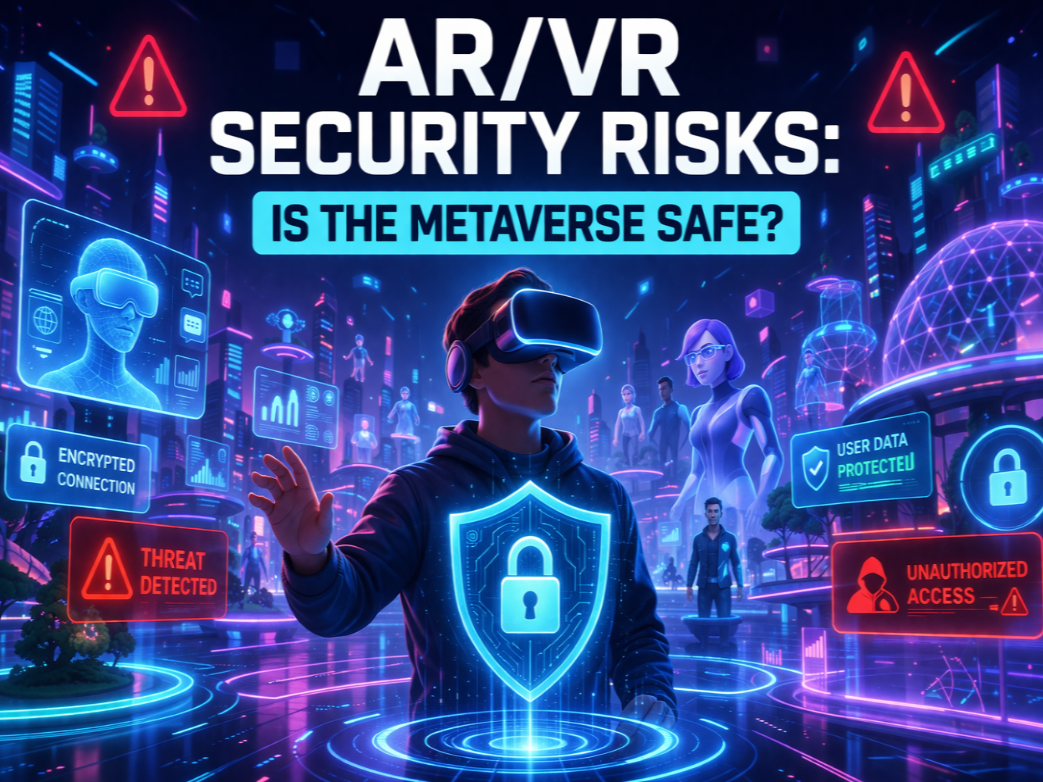
In today’s digital world, staying secure isn’t just an option—it’s a necessity. As immersive technologies like Augmented Reality (AR) and Virtual Reality (VR) evolve, they are reshaping how we interact, work, and socialize. However, alongside innovation comes a new wave of cybersecurity concerns. This raises an important question: are AR/VR environments secure, and is the metaverse safe for users and businesses?
As highlighted in modern security-focused platforms like BotDef’s cybersecurity insights, understanding emerging threats is essential before fully embracing new digital ecosystems. In this blog, we’ll explore the AR/VR security risks, analyze real-world concerns, and provide actionable strategies to stay protected in the metaverse.
Understanding AR/VR and the Metaverse
Before diving into risks, it’s important to understand what AR, VR, and the metaverse represent.
- Augmented Reality (AR): Overlays digital content onto the real world (e.g., mobile AR apps).
- Virtual Reality (VR): Fully immersive digital environments accessed via headsets.
- Metaverse: A shared, persistent virtual space where users interact through avatars.
These technologies rely heavily on real-time data processing, sensors, biometrics, and connectivity, making them highly sensitive to cyber threats.
Why AR/VR Security Risks Are a Growing Concern
The expansion of AR/VR technologies has introduced new vulnerabilities that traditional security models were not designed to handle.
1. Massive Data Collection
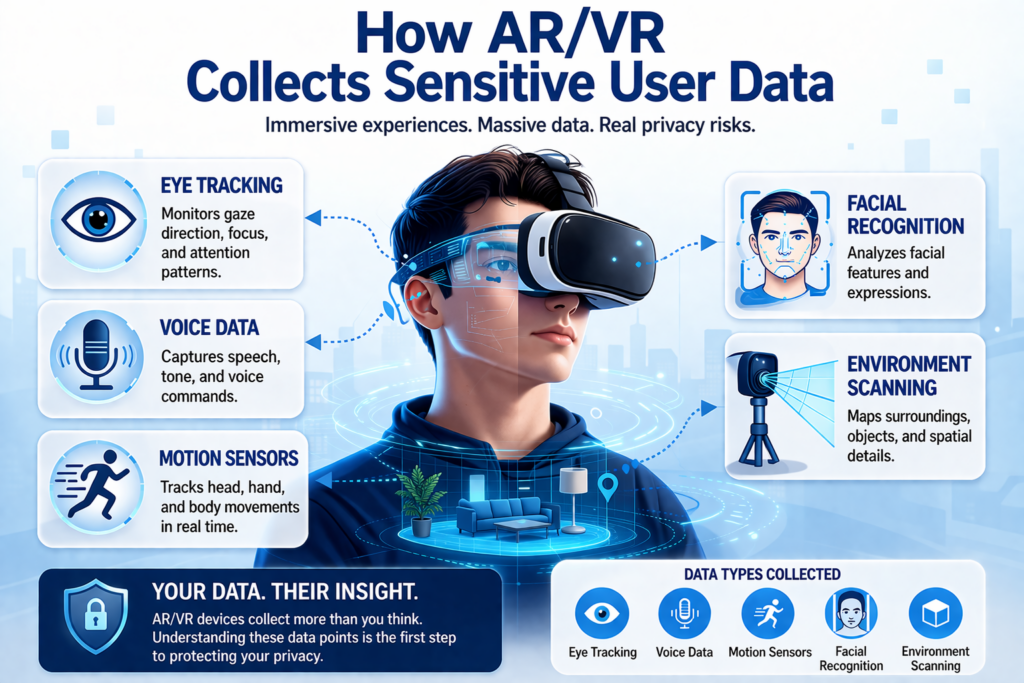
AR/VR devices collect vast amounts of user data, including:
- Eye movement tracking
- Facial expressions
- Voice patterns
- Physical surroundings
This data is far more personal than typical browsing data. If compromised, it could lead to identity theft or behavioral profiling.
2. Expanded Attack Surface
Unlike traditional systems, AR/VR ecosystems include:
- Wearable devices
- Sensors and cameras
- Cloud platforms
- Third-party applications
Each layer introduces potential entry points for attackers.
3. Real-Time Interaction Risks
Because AR/VR operates in real time, any breach can have immediate consequences, such as:
- Unauthorized access to virtual environments
- Manipulation of user experiences
- Social engineering attacks in immersive spaces
Common AR/VR Security Risks in the Metaverse
Understanding specific threats helps in building stronger defenses. Below are the most critical AR/VR security risks impacting the metaverse.
AR/VR Security Risks in the Metaverse
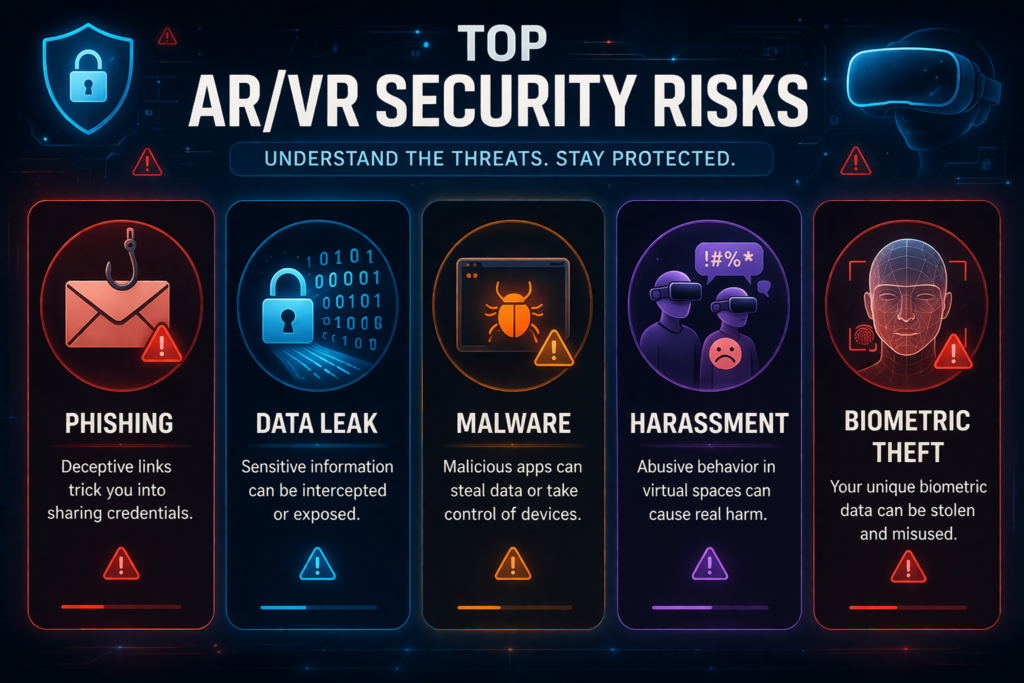
1. Identity Theft and Avatar Hijacking
In the metaverse, your avatar represents your identity. Hackers can:
- Steal login credentials
- Clone avatars
- Impersonate users
This can lead to fraud, reputational damage, and unauthorized transactions.
2. Biometric Data Exploitation
AR/VR devices collect biometric data such as:
- Retina scans
- Motion patterns
- Gesture tracking
If attackers gain access, they can misuse this data for advanced identity tracking or surveillance.
3. Virtual Harassment and Social Engineering
Unlike traditional platforms, harassment in VR feels more real due to immersion.
- Attackers can manipulate trust
- Phishing attempts can occur through avatars
- Users may unknowingly share sensitive information
According to research from the World Economic Forum, immersive environments significantly increase emotional vulnerability, making users more susceptible to manipulation.
4. Malware and Application Vulnerabilities
Malicious apps within AR/VR platforms can:
- Steal data
- Inject malicious scripts
- Control device behavior
Just like mobile apps, unverified VR applications pose a serious risk.
5. Data Interception and Network Attacks
Since AR/VR relies on real-time connectivity:
- Data can be intercepted over insecure networks
- Man-in-the-middle attacks can occur
- Sensitive interactions may be exposed
How AR/VR Security Risks Impact Businesses
Businesses adopting AR/VR for training, collaboration, and customer engagement must consider the implications.
Key Business Risks:
- Intellectual Property Theft: Virtual collaboration spaces may expose confidential data.
- Brand Reputation Damage: Security breaches can harm trust.
- Compliance Challenges: Handling biometric data requires strict regulations.
- Financial Losses: Cyberattacks can disrupt operations and lead to legal penalties.
For organizations exploring secure digital ecosystems, following frameworks similar to those discussed in BotDef’s threat intelligence resources can significantly reduce risk exposure.
Real-World Examples of AR/VR Security Concerns
While the metaverse is still evolving, early incidents highlight potential dangers.
Example 1: Virtual Property Theft
Users have reported unauthorized access to digital assets, including NFTs and virtual land.
Example 2: VR Meeting Data Leaks
Insecure virtual meeting platforms have exposed confidential business discussions.
Example 3: Fake Virtual Identities
Attackers have created fake avatars to manipulate users and conduct scams.
These examples demonstrate that AR/VR security risks are not theoretical—they are already happening.
How to Mitigate AR/VR Security Risks
Despite the risks, there are effective strategies to enhance security in AR/VR environments.
1. Strong Authentication Mechanisms
- Use multi-factor authentication (MFA)
- Implement biometric verification securely
- Avoid weak or reused passwords
2. Secure Device Management
- Keep firmware and software updated
- Use trusted hardware only
- Disable unnecessary permissions
3. Data Encryption
Encrypt all data:
- At rest
- In transit
- During processing
Encryption ensures that even if data is intercepted, it remains unusable.
4. User Awareness and Training
Educate users about:
- Phishing in virtual environments
- Safe interaction practices
- Privacy settings
Awareness is often the first line of defense.
5. Application Security Audits
- Use only verified apps
- Conduct regular vulnerability assessments
- Monitor third-party integrations
For deeper insights into proactive defense strategies, refer to trusted cybersecurity learning hubs like CISA’s official guidelines, which provide frameworks applicable even in emerging technologies.
The Role of AI in AR/VR Security
Artificial Intelligence is playing a crucial role in enhancing AR/VR security.
Key Applications:
- Threat Detection: AI identifies unusual behavior in real time
- Fraud Prevention: Detects fake avatars and suspicious activity
- Automated Monitoring: Continuously scans environments for vulnerabilities
However, attackers are also using AI, making this a constantly evolving battle.
Privacy Concerns in the Metaverse
Security and privacy go hand in hand. AR/VR introduces new privacy challenges:
- Continuous surveillance through sensors
- Tracking of physical movements
- Collection of emotional responses
This level of data collection raises ethical concerns about user consent and data ownership.
Is the Metaverse Safe?
The answer is nuanced.
The metaverse is not inherently unsafe, but it is not fully secure either. Like the early internet, it is still developing security standards.
Factors That Influence Safety:
- Platform security policies
- User awareness
- Regulatory frameworks
- Technology maturity
With the right safeguards, the metaverse can become a secure and productive digital space.
Future of AR/VR Security
As adoption grows, we can expect:
- Stronger regulations around biometric data
- Advanced encryption techniques
- Decentralized identity systems
- Improved device-level security
Cybersecurity will become a foundational component of AR/VR development rather than an afterthought.
For businesses and developers aiming to stay ahead, continuously learning through reliable platforms like BotDef’s security blog resources can help navigate evolving threats effectively.
Conclusion
AR/VR security risks are one of the most critical challenges shaping the future of the metaverse. While immersive technologies offer incredible opportunities, they also introduce complex vulnerabilities that demand attention.
From biometric data exploitation to avatar hijacking, the risks are real—but manageable. By adopting strong security practices, staying informed, and leveraging advanced tools, users and organizations can safely explore the metaverse.
Ultimately, the question “Is the metaverse safe?” depends on how seriously we take security today. With proactive measures and continuous innovation, a secure immersive future is not just possible—it’s inevitable.