Introduction: Why Cybersecurity Myths Are More Dangerous Than Cyber Attacks
In today’s digital world, cyber threats are increasing faster than businesses can react. Surprisingly, what makes companies more vulnerable is not always the hacker—it is the myths they believe about cybersecurity. These false beliefs create gaps in protection and give attackers easy entry points. Moreover, as cybersecurity tools evolve, many businesses still operate with outdated assumptions that no longer match real-world risks.
According to Botdef, a leading cybersecurity insights platform, most small and mid-sized businesses fail security checks because they rely on old myths rather than verified security practices. (Internal link suggestion if you want: https://botdef.com/blogs/ — Replace with actual Botdef blog link later.)
Most Common Cybersecurity Myths You Still Believe — And Why They’re Wrong
Myth 1 — “My Business Is Too Small to Be Hacked”
This is one of the most common misconceptions. Many small business owners believe hackers only target big companies like banks or tech giants. However, cybercriminals prefer small businesses because they often have weak security and limited monitoring.
✔ The Truth
Small businesses make up 43% of all cyber attack victims globally. Hackers use automated tools that scan thousands of websites at once—meaning they don’t choose you; they simply find you vulnerable.
🔗 Useful reference:
You can explore similar insights on Botdef blogs here:
👉 https://botdef.com/blogs/
Myth 2 — “Antivirus Software Alone Will Protect Me”
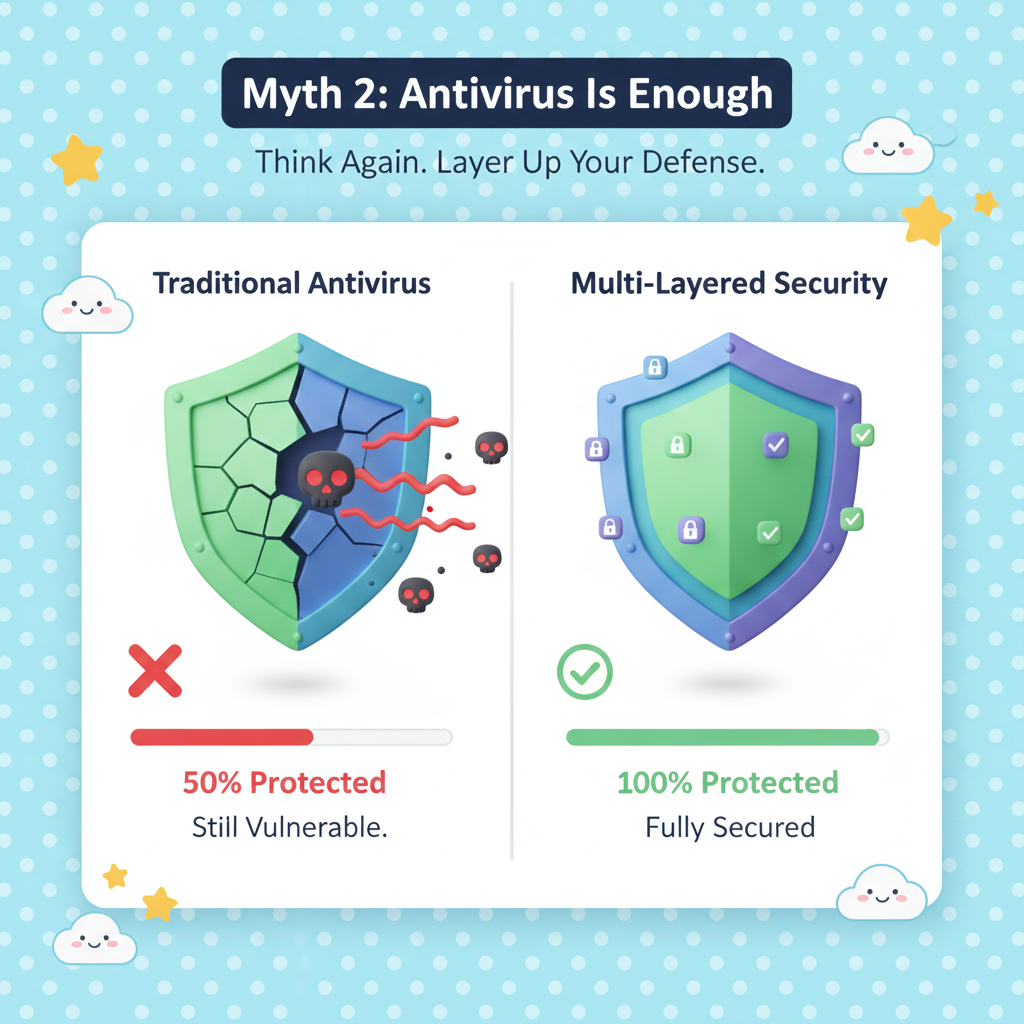
Many companies use only a basic antivirus tool and assume it’s enough. However, modern cyber attacks are more complex, using phishing, malware, social engineering, ransomware, and zero-day vulnerabilities.
✔ The Truth
Antivirus is just one layer. You need:
- Firewall
- Multi-factor authentication
- Data encryption
- Regular backup
- Employee training
- Network monitoring
Myth 3 — “Strong Passwords Are Enough to Stay Safe”
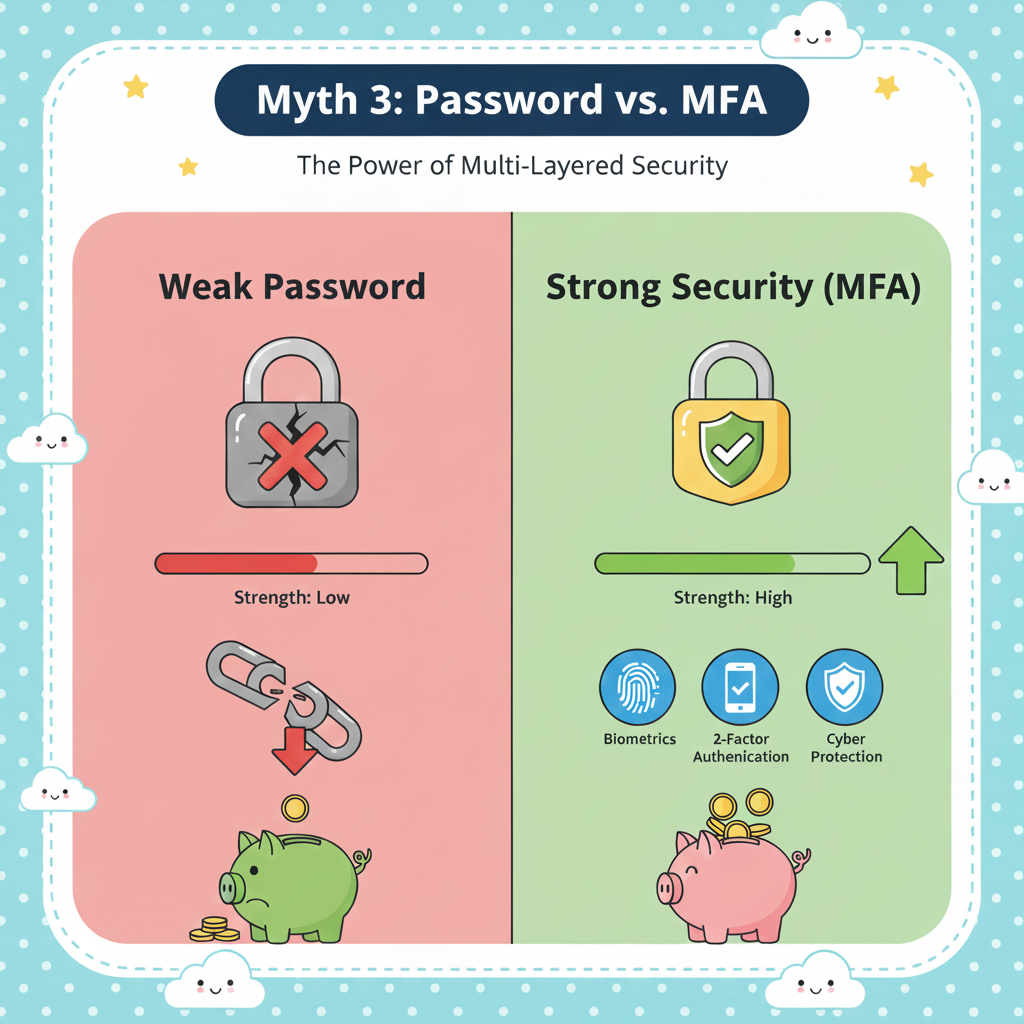
Even though strong passwords are important, they are not enough today.
✔ The Truth
Attackers use tools that can crack even complex passwords in minutes. The only true protection is Multi-Factor Authentication (MFA).
Myth 4 — “Cybersecurity Is Only the IT Department’s Job”
Many employees believe cybersecurity is not their responsibility.
✔ The Truth
Over 90% of data breaches happen due to human error, such as clicking malicious emails.
Thus, every employee needs regular cybersecurity awareness training.
Myth 5 — “We Use Cloud Storage, So Our Data Is Automatically Safe”
Cloud companies provide security, but they also follow a shared responsibility model.
✔ The Truth
You must protect:
- Passwords
- Access levels
- Data backups
- Employee logins
- Device security
Cloud security does not replace your internal security practice.
Myth 6 — “Hackers Only Use Advanced Tools”
Hollywood movies show hackers typing complex code in dark rooms. Reality is different.
✔ The Truth
Most attacks begin with simple phishing emails or fake login pages.
Even a small mistake opens a big door for attackers.
Myth 7 — “We Have Backups, So Ransomware Cannot Hurt Us”
Many businesses rely on backups, but forget to secure or test them.
✔ The Truth
Hackers now attack backups too. Without encrypted and offsite backups, ransomware can still harm your business.
Myth 8 — “Cybersecurity Tools Are Too Expensive”
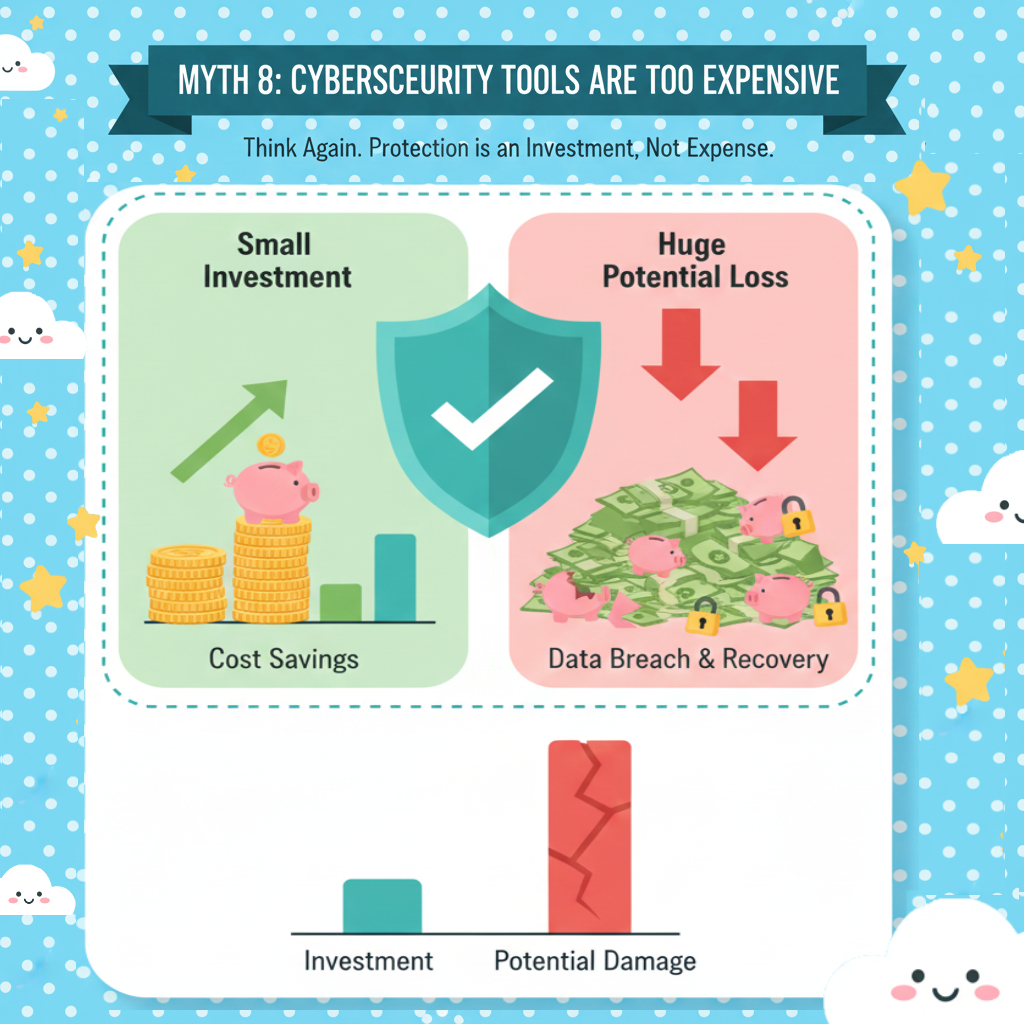
Companies avoid investing in protection, thinking it’s costly.
✔ The Truth
A single data breach costs more than a full-year of cybersecurity solutions.
Cyber protection is an investment, not an expense.
How to Protect Your Business from These Myths
Step-by-Step Action Plan for 2025
✔ 1. Use Multi-Factor Authentication (MFA)
Instantly reduces 95% of hacking risks.
✔ 2. Train Your Team on Cyber Awareness
Human error is the #1 cause of attacks.
✔ 3. Keep All Systems Updated
Outdated software is an open gate for hackers.
✔ 4. Use AI-powered Cybersecurity Tools
Advanced tools like Botdef (example reference) help detect unusual activity in real-time.
✔ 5. Perform Regular Security Audits
Monthly checks help identify vulnerabilities early.
✔ 6. Backup Your Data Securely
Use encrypted and offsite backups.
Final Conclusion: Stop Believing Myths, Start Building Security
Cybersecurity is no longer optional. As cyber attacks become smarter, believing false myths can be extremely harmful to your business. Therefore, adopting the right cybersecurity practices and staying updated is essential.
If you follow the steps in this blog and use trusted tools like Botdef, you can significantly reduce your risk and keep your business digitally secure.