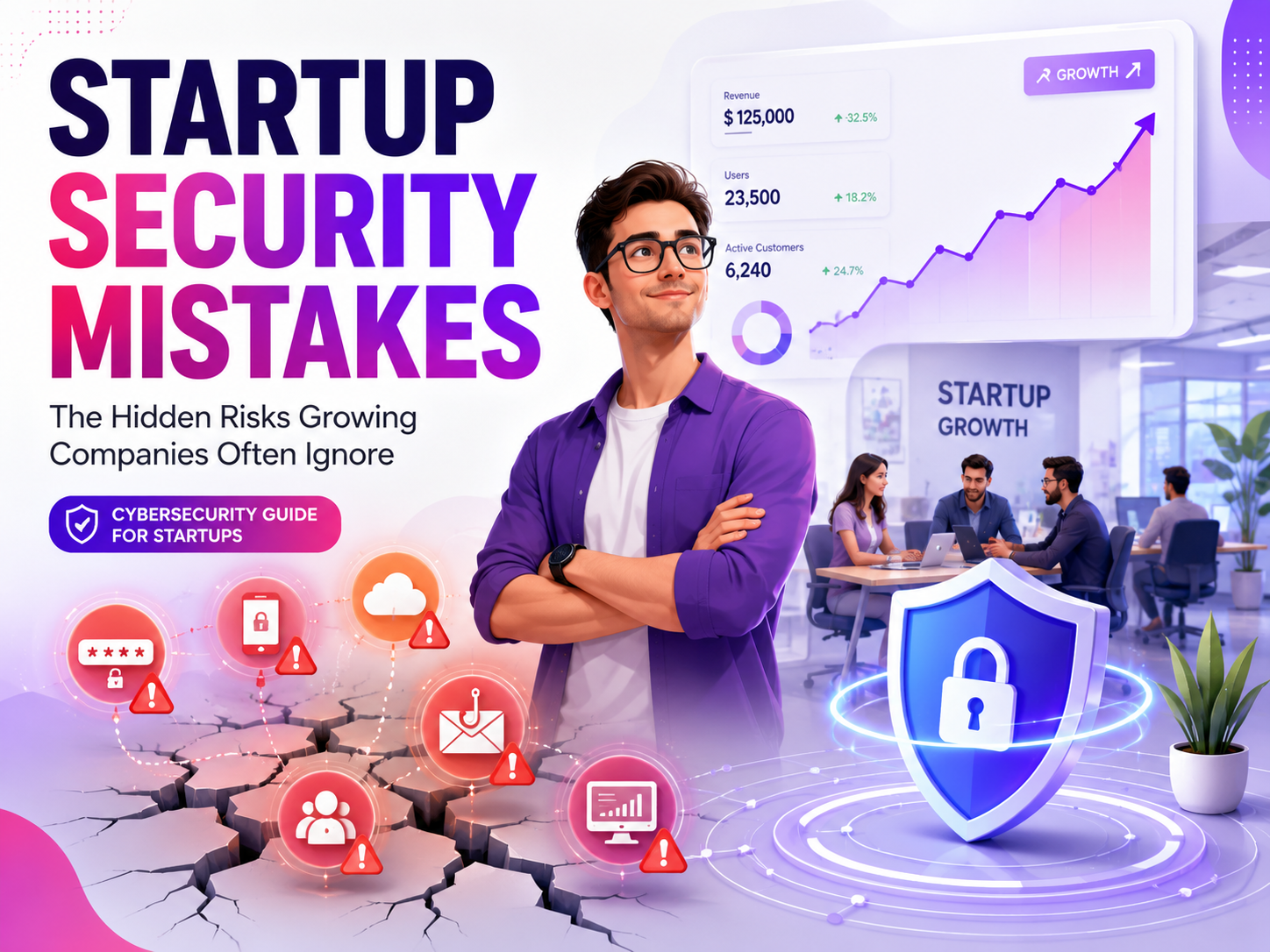
In today’s digital world, staying secure isn’t just an option—it’s a necessity. Cyber threats are evolving faster than ever, and startups often become attractive targets because they typically prioritize growth, product development, and customer acquisition over cybersecurity. While this approach may seem reasonable during the early stages, neglecting security can lead to devastating consequences including data breaches, financial losses, regulatory penalties, and damaged customer trust.
Many founders assume that cybercriminals only target large enterprises. However, attackers frequently focus on smaller organizations because they often have weaker defenses and fewer security resources. According to various industry reports, small and medium-sized businesses continue to experience a growing number of cyberattacks each year.
For startups looking to build a strong security foundation, resources available through platforms like BotDef can help organizations stay informed about emerging threats, security best practices, and modern protection strategies.
This article explores the most common startup security mistakes, why they happen, and practical steps to fix them before they become costly problems.
Why Startup Security Matters More Than Ever
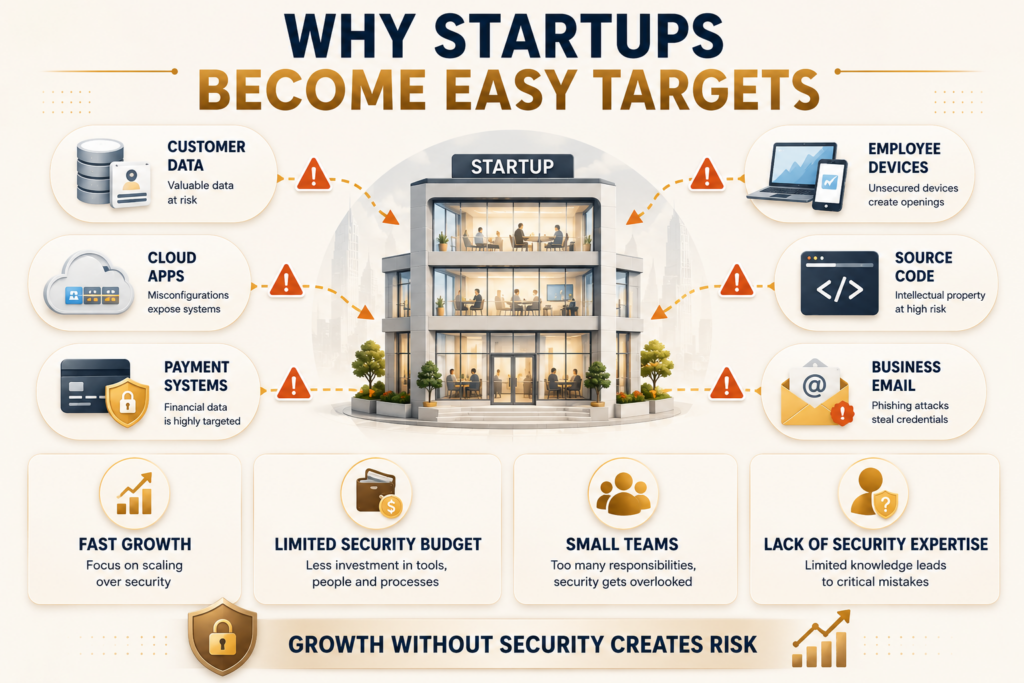
Startups operate in a highly competitive environment where speed often takes priority over security. Teams are small, budgets are limited, and everyone focuses on shipping products quickly.
Unfortunately, cybercriminals understand this reality.
A successful attack can expose:
- Customer information
- Payment data
- Intellectual property
- Internal business communications
- Product source code
- Financial records
The impact extends beyond immediate financial damage. Investors, customers, and partners expect organizations to protect sensitive information. One major breach can significantly affect growth and credibility.
This is why addressing mistakes startups make with security should be a priority from day one.
1. Treating Security as an Afterthought
One of the most common startup mistakes is viewing security as something that can be added later.
Founders often focus on:
- Product development
- User acquisition
- Marketing campaigns
- Revenue generation
Security gets pushed down the priority list until an incident occurs.
Why This Is Dangerous
Building security after launch is significantly more expensive than integrating it during development. Security flaws embedded within architecture become harder to identify and fix as systems grow.
Moreover, attackers actively scan newly launched applications looking for vulnerabilities.
How to Fix It
Adopt a “security-by-design” mindset.
This means:
- Including security requirements during planning
- Conducting threat modeling
- Performing security reviews before deployment
- Training developers on secure coding practices
Security should become part of the development lifecycle rather than a separate project.
2. Weak Password Policies
Passwords remain one of the biggest security weaknesses in many startups.
Common issues include:
- Reused passwords
- Shared credentials
- Weak passwords
- Lack of password management
Many employees use the same passwords across multiple platforms, creating significant risks.
Real-World Impact
If one third-party service is compromised, attackers may use stolen credentials to access other business systems.
This attack technique, known as credential stuffing, remains highly effective.
How to Fix It
Implement:
- Strong password policies
- Password managers
- Multi-factor authentication (MFA)
- Regular credential reviews
Require MFA for:
- Email accounts
- Cloud platforms
- Administrative systems
- Development environments
The U.S. Cybersecurity and Infrastructure Security Agency (CISA) provides excellent guidance on authentication best practices through its official resources at CISA.
3. Ignoring Employee Security Training
Technology alone cannot prevent cyberattacks.
Humans remain one of the most exploited attack vectors.
Employees often encounter:
- Phishing emails
- Fake login pages
- Social engineering attempts
- Malicious attachments
Without proper training, even strong technical defenses can fail.
Common Training Gaps
Many startups never provide security awareness training.
As a result, employees may:
- Click suspicious links
- Download malware
- Share sensitive information
- Fall victim to impersonation scams
How to Fix It
Establish regular security education programs.
Training should cover:
- Phishing detection
- Safe browsing habits
- Password security
- Data handling procedures
- Remote work security
Short monthly training sessions are often more effective than lengthy annual presentations.
4. Lack of Access Control
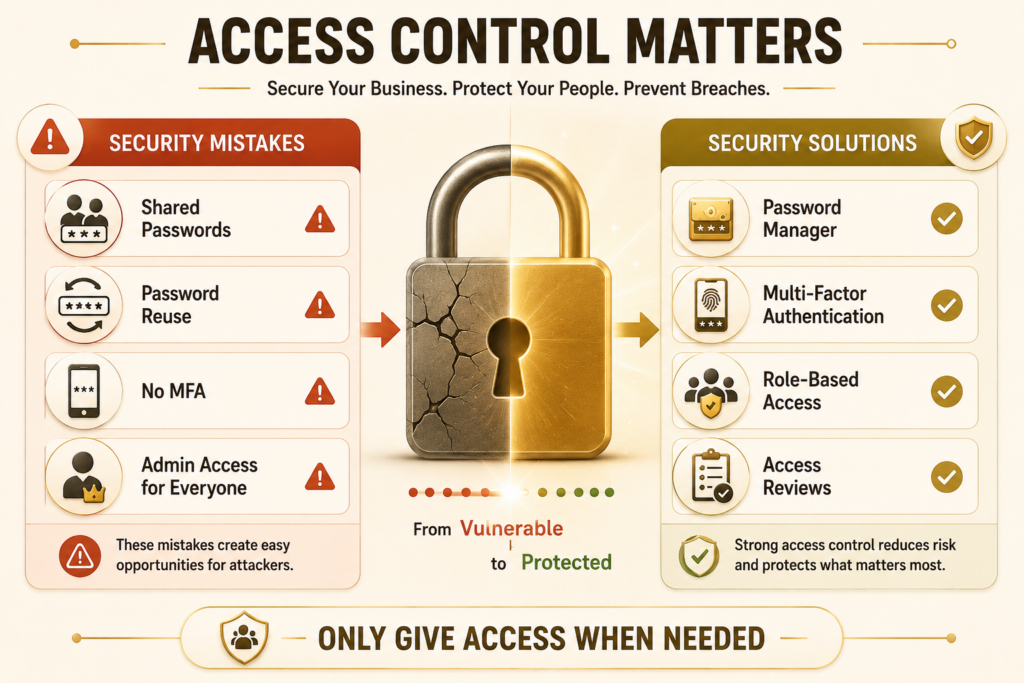
Many startups grant excessive permissions to employees.
This often happens because:
- Teams are small
- Processes are informal
- Convenience is prioritized
Over time, employees accumulate unnecessary access rights.
Risks of Excessive Permissions
If an employee account becomes compromised, attackers gain access to everything that account can reach.
This increases the blast radius of a breach.
How to Fix It
Follow the Principle of Least Privilege (PoLP).
Employees should only have access to resources necessary for their roles.
Best practices include:
- Role-based access control
- Permission audits
- Access expiration policies
- Separation of duties
Review permissions quarterly to remove unnecessary privileges.
5. Failing to Secure Cloud Infrastructure
Most startups rely heavily on cloud platforms.
Cloud services provide flexibility and scalability, but misconfigurations remain a leading cause of breaches.
Common Cloud Security Errors
Examples include:
- Public storage buckets
- Exposed databases
- Open administrative ports
- Misconfigured APIs
These mistakes often expose sensitive information to the internet.
How to Fix It
Implement cloud security best practices:
- Enable logging and monitoring
- Restrict public access
- Encrypt sensitive data
- Use identity and access management controls
- Conduct regular cloud security assessments
Organizations can also benefit from following recommendations published by the OWASP Foundation, which provides extensive guidance on application and cloud security risks.
6. Neglecting Software Updates and Patch Management
Attackers frequently exploit known vulnerabilities.
Unfortunately, many startups delay updates because they fear disruptions or compatibility issues.
Why Delayed Patching Is Risky
Once a vulnerability becomes public, attackers quickly develop exploit tools.
Organizations that postpone updates remain exposed for extended periods.
How to Fix It
Develop a structured patch management process.
Include:
- Asset inventories
- Automated updates where possible
- Vulnerability scanning
- Emergency patch procedures
Critical vulnerabilities should be addressed immediately.
7. Not Encrypting Sensitive Data
Encryption is a fundamental security control.
Yet many startups fail to properly encrypt data.
Types of Data That Require Encryption
Sensitive information includes:
- Customer records
- Payment information
- Authentication tokens
- Internal communications
- Proprietary business data
How to Fix It
Implement encryption:
- At rest
- In transit
- During backups
Use modern encryption standards and avoid storing sensitive information in plain text.
Encryption significantly reduces the impact of data exposure events.
8. Poor Incident Response Planning
Many startups assume they will never experience a cyberattack.
As a result, they never create incident response procedures.
This can turn a manageable event into a major crisis.
What Happens Without a Plan?
Teams often struggle to answer critical questions:
- Who is responsible?
- How should systems be isolated?
- When should customers be notified?
- How should evidence be preserved?
Delays can increase damage significantly.
How to Fix It
Create an incident response plan that includes:
- Escalation procedures
- Communication workflows
- Recovery processes
- Legal considerations
- Post-incident reviews
Conduct tabletop exercises regularly to test readiness.
For additional security insights and practical cyber defense strategies, startups can explore educational content available through the BotDef Security Blog, which covers evolving cybersecurity trends and protective measures.
9. Overlooking Third-Party Security Risks
Modern startups depend on numerous third-party vendors.
Examples include:
- Payment providers
- Analytics tools
- CRM platforms
- Cloud services
- Marketing software
Every integration introduces potential risk.
Why Vendor Security Matters
A compromised vendor can create indirect exposure for your organization.
Several major breaches have originated through third-party access.
How to Fix It
Evaluate vendors before adoption.
Review:
- Security certifications
- Compliance reports
- Data protection policies
- Incident response capabilities
Perform periodic vendor assessments instead of relying solely on initial evaluations.
10. Lack of Continuous Monitoring
Many startups only investigate security after an incident occurs.
Without visibility, threats can remain undetected for weeks or months.
Common Monitoring Blind Spots
Organizations often miss:
- Unauthorized logins
- Data exfiltration
- Privilege escalation
- Malware activity
- Suspicious API usage
How to Fix It
Deploy monitoring solutions that provide:
- Real-time alerts
- Security event logging
- User behavior analysis
- Threat detection
Continuous monitoring enables faster response and reduces potential damage.
Building a Startup Security Roadmap
Understanding the mistakes startups make with security is only the first step.
The next step is creating a practical roadmap.
Phase 1: Establish Foundations
Focus on:
- MFA implementation
- Password management
- Access controls
- Employee awareness training
These controls deliver immediate risk reduction.
Phase 2: Strengthen Infrastructure
Invest in:
- Cloud security reviews
- Vulnerability management
- Patch automation
- Data encryption
This phase improves technical resilience.
Phase 3: Mature Security Operations
Develop:
- Security monitoring
- Incident response plans
- Vendor risk management
- Security governance
These measures prepare startups for long-term growth.
Security Is a Business Advantage, Not Just an IT Requirement
Many founders view cybersecurity as a cost center.
However, modern customers increasingly evaluate security before choosing products and services.
Strong security can:
- Increase customer trust
- Support compliance requirements
- Improve investor confidence
- Reduce operational risk
- Protect business continuity
Organizations that prioritize security early often avoid costly remediation efforts later.
More importantly, they build a reputation for reliability and professionalism.
Conclusion
The most dangerous mistakes startups make with security are often the ones that seem harmless in the early stages of growth. Weak passwords, poor access controls, unpatched systems, inadequate training, and missing incident response plans can create vulnerabilities that attackers eagerly exploit.
Fortunately, these challenges are preventable.
By adopting security-first thinking, implementing layered defenses, training employees, and continuously monitoring systems, startups can significantly reduce risk while supporting sustainable growth.
Cybersecurity should never be viewed as a one-time project. It is an ongoing process that evolves alongside the business. Startups that invest in security today are better positioned to protect customers, maintain trust, and navigate tomorrow’s increasingly complex threat landscape.
To stay informed about emerging threats, cybersecurity best practices, and practical defense strategies, organizations can leverage resources available through BotDef Security Solutions as part of their broader security improvement journey.