In today’s digital world, staying secure isn’t just an option—it’s a necessity. This blog is your go-to source for the latest security updates and insights.
Launching a startup is exciting. Founders focus on product development, customer acquisition, fundraising, and growth. However, cybersecurity often becomes an afterthought because budgets are tight and resources are limited. Unfortunately, cybercriminals know this reality very well. They frequently target startups because many young businesses lack dedicated security teams, mature processes, and enterprise-grade protection.
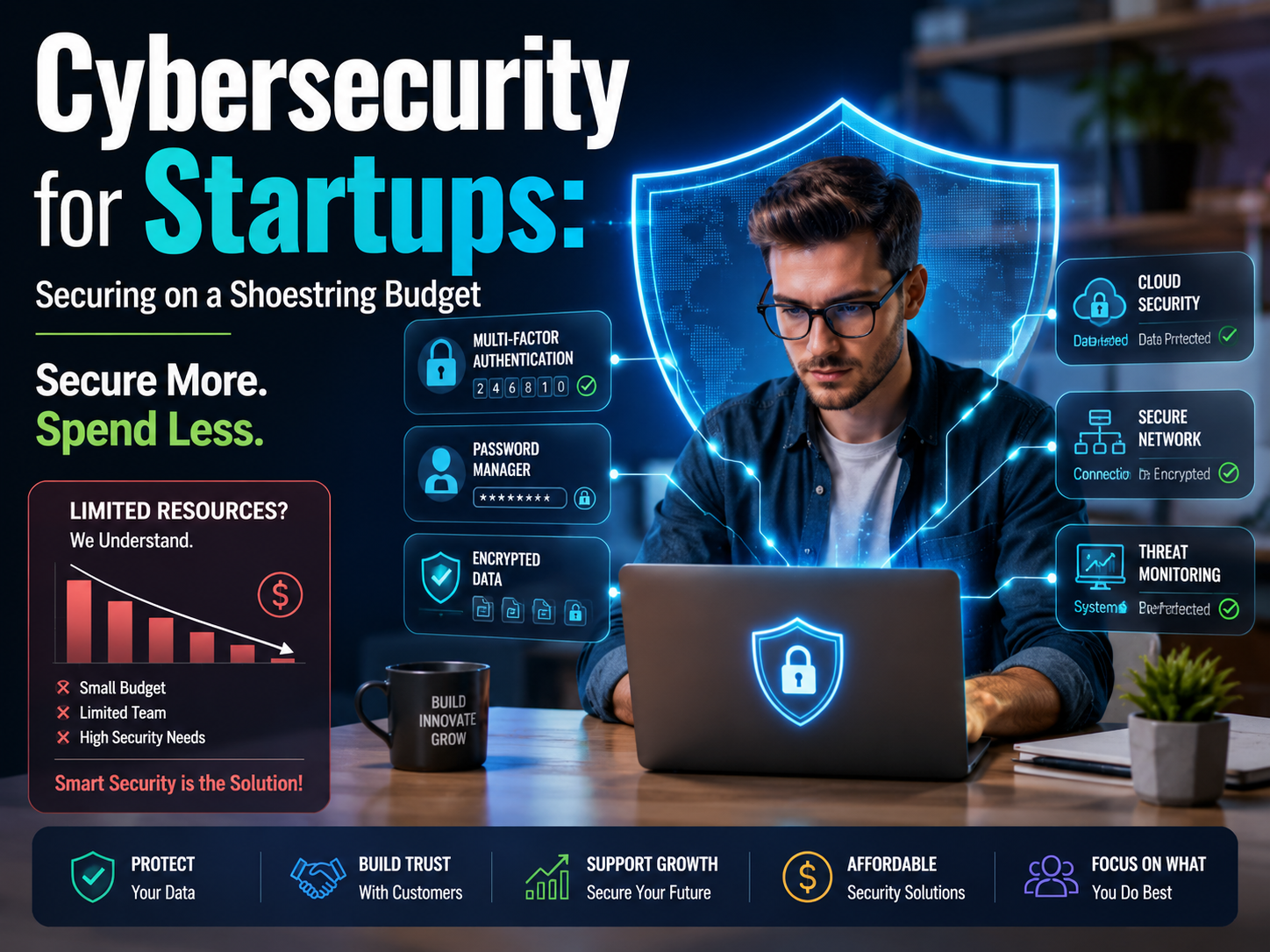
The good news is that cybersecurity for startups does not require massive investments. Even with a limited budget, startups can significantly reduce risks by implementing practical security measures, using free or low-cost tools, and creating a security-first culture from day one.
As organizations increasingly rely on digital infrastructure, protecting sensitive information becomes essential for long-term success. Resources such as the BotDef security platform can help businesses understand emerging threats and strengthen their overall security posture through proactive defense strategies. Learn more about cybersecurity best practices at.
This guide explores affordable yet effective ways startups can strengthen their defenses without breaking the bank.
Why Cybersecurity Matters More Than Ever for Startups
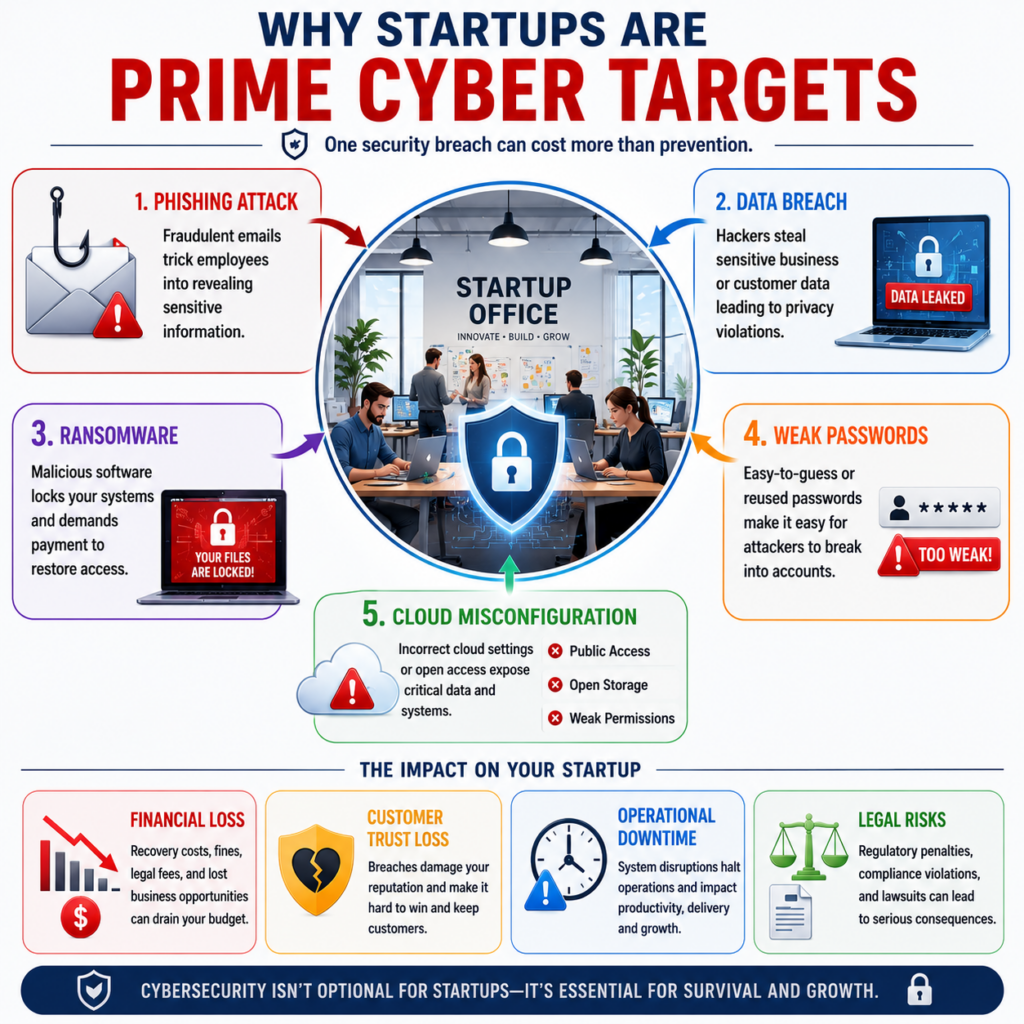
Many startup founders believe cybercriminals only target large enterprises. In reality, attackers often view startups as easier targets because they typically have fewer security controls.
A successful cyberattack can result in:
- Financial losses
- Data breaches
- Regulatory penalties
- Customer trust issues
- Operational disruptions
- Reputation damage
- Intellectual property theft
According to guidance from the Cybersecurity and Infrastructure Security Agency (CISA), small and medium-sized businesses face increasing cyber threats and should adopt fundamental security controls to reduce risk.
For startups, even a single security incident can significantly impact growth and investor confidence.
Understanding the Biggest Cybersecurity Risks for Startups
Before implementing security measures, startups should understand the most common threats.
Phishing Attacks
Phishing remains one of the most effective attack methods. Employees receive emails that appear legitimate but contain malicious links or attachments.
Attackers may attempt to:
- Steal login credentials
- Install malware
- Access cloud accounts
- Conduct financial fraud
Weak Password Practices
Many security breaches occur because employees use:
- Simple passwords
- Reused passwords
- Shared credentials
These practices create easy opportunities for attackers.
Cloud Misconfigurations
Startups heavily depend on cloud services. Unfortunately, incorrectly configured storage buckets, databases, or access permissions can expose sensitive information.
Ransomware
Ransomware attacks encrypt critical data and demand payment for restoration. Startups with limited backup strategies are especially vulnerable.
Insider Threats
Not all threats come from outside the organization. Accidental employee mistakes can expose sensitive information and create security vulnerabilities.
Cybersecurity for Startups: Building a Strong Foundation
Effective cybersecurity for startups begins with a strong foundation rather than expensive technology.
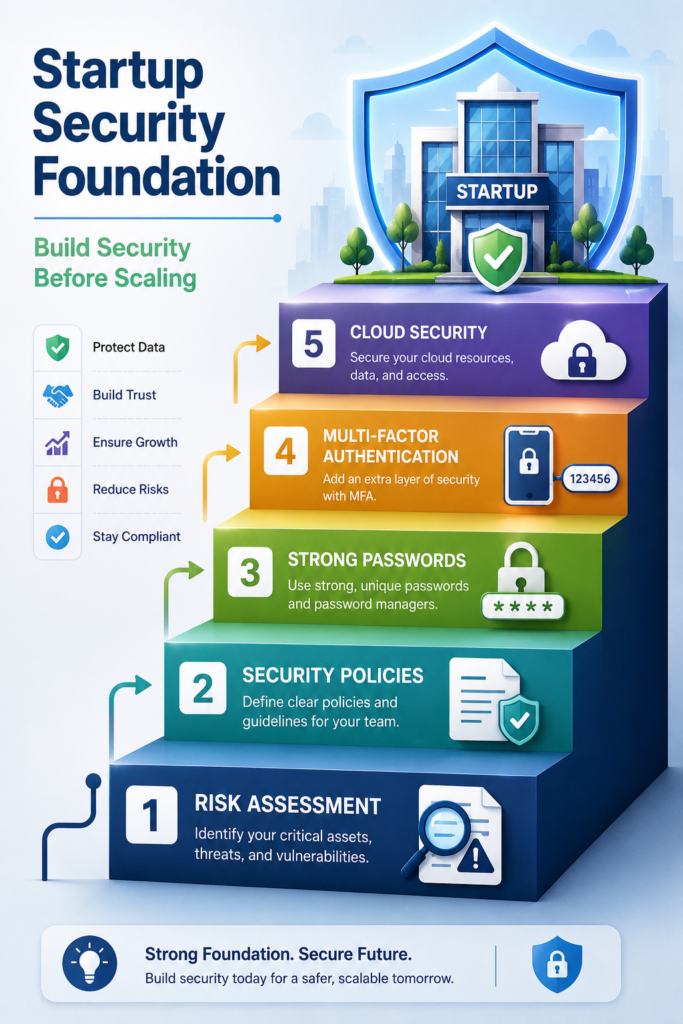
Start with a Risk Assessment
Identify:
- Critical business assets
- Sensitive customer data
- Financial information
- Intellectual property
- Operational systems
Ask yourself:
- What data would hurt the business if exposed?
- Which systems are essential for daily operations?
- What would happen if those systems became unavailable?
Understanding your risk landscape helps prioritize security investments.
Develop Basic Security Policies
Even small startups should establish simple security guidelines covering:
- Password requirements
- Device usage
- Remote work security
- Data handling procedures
- Incident reporting
Clear policies reduce confusion and improve consistency.
Implement Multi-Factor Authentication Everywhere
If there is one low-cost security measure every startup should adopt immediately, it is Multi-Factor Authentication (MFA).
MFA requires users to verify their identity using additional factors such as:
- Authentication apps
- Security keys
- SMS verification codes
- Biometric authentication
Benefits include:
- Reduced account compromise risk
- Improved protection against phishing
- Enhanced cloud security
- Stronger access controls
Most cloud providers offer MFA at little or no additional cost.
Use Strong Password Management
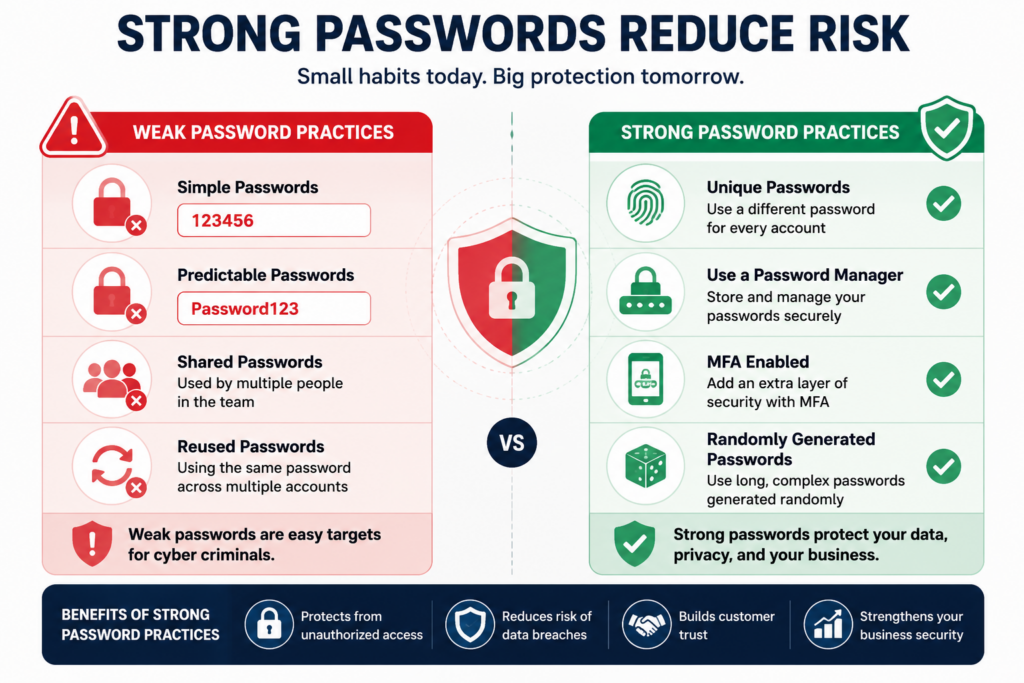
Human memory is not designed to manage dozens of complex passwords.
Instead, startups should implement password managers that:
- Generate strong passwords
- Store credentials securely
- Reduce password reuse
- Improve account security
A password manager is significantly cheaper than recovering from a security breach.
Password Best Practices
Employees should:
- Use unique passwords
- Avoid predictable phrases
- Enable MFA
- Never share credentials
- Change compromised passwords immediately
Secure Your Cloud Environment
Most startups rely heavily on cloud infrastructure.
Cloud platforms offer excellent security features, but those features must be configured properly.
Essential Cloud Security Practices
Principle of Least Privilege
Users should only receive access necessary for their roles.
For example:
- Developers do not need financial system access.
- Marketing teams do not require database administration rights.
Regular Permission Reviews
Conduct periodic reviews to remove:
- Unused accounts
- Former employee access
- Excessive permissions
Encrypt Sensitive Data
Encryption protects data:
- At rest
- In transit
- During storage and transfers
Modern cloud providers offer built-in encryption capabilities that startups should enable by default.
Train Employees to Recognize Threats
Technology alone cannot solve cybersecurity challenges.
Employees represent both the greatest security risk and the strongest line of defense.
Affordable Security Awareness Training
Startups can conduct:
- Monthly security briefings
- Internal awareness campaigns
- Simulated phishing exercises
- Short educational workshops
Topics should include:
- Phishing detection
- Social engineering
- Password security
- Safe file sharing
- Remote work practices
According to the National Institute of Standards and Technology (NIST) cybersecurity framework, employee awareness plays a crucial role in reducing organizational risk.
Keep Software Updated
Outdated software creates opportunities for attackers.
Many breaches occur because organizations fail to install available security patches.
Prioritize Updates for:
- Operating systems
- Browsers
- Applications
- Plugins
- Firewalls
- Servers
Automated patch management can significantly reduce exposure to known vulnerabilities.
Back Up Critical Data Regularly
Backups are essential for business continuity.
Without backups, ransomware attacks or accidental deletions can become catastrophic.
Follow the 3-2-1 Backup Rule
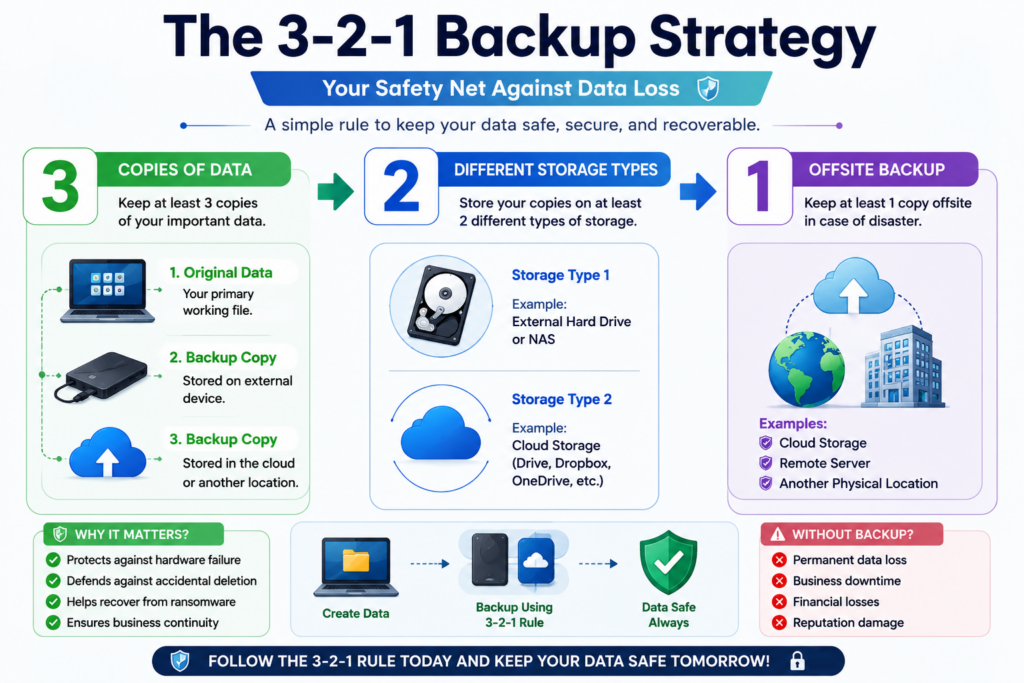
Maintain:
- 3 copies of data
- 2 different storage formats
- 1 offsite or cloud backup
Regularly test restoration procedures to ensure backups actually work when needed.
Use Free and Affordable Security Tools
A limited budget does not mean limited protection.
Many highly effective security tools offer free or startup-friendly pricing.
Categories Worth Exploring
Endpoint Protection
Protect devices from:
- Malware
- Spyware
- Ransomware
Vulnerability Scanners
Identify security weaknesses before attackers do.
Password Managers
Improve credential security organization-wide.
Log Monitoring Tools
Detect suspicious activity and unauthorized access attempts.
Secure Communication Platforms
Protect internal collaboration and sensitive conversations.
Startups looking to strengthen their security posture can also explore cybersecurity resources and educational content available through the BotDef blog, which regularly covers threat intelligence, security awareness, and defensive strategies.
Create an Incident Response Plan
Many startups assume incidents will never happen.
Unfortunately, every organization should prepare for the possibility of a breach.
What an Incident Response Plan Should Include
Detection Procedures
How will the team identify suspicious activity?
Escalation Contacts
Who should be notified?
Include:
- Founders
- IT personnel
- Legal advisors
- Security consultants
Containment Steps
How will affected systems be isolated?
Recovery Procedures
How will services return to normal operation?
Even a simple incident response document can dramatically improve recovery speed.
Secure Remote and Hybrid Work Environments
Remote work has become standard for many startups.
However, remote environments introduce additional risks.
Remote Security Best Practices
Require employees to:
- Use VPNs when necessary
- Enable MFA
- Lock devices when unattended
- Avoid public Wi-Fi networks
- Keep devices updated
Additionally, implement endpoint management policies to maintain visibility across distributed teams.
Protect Customer Data and Privacy
Customer trust is one of a startup’s most valuable assets.
Protecting customer information should remain a top priority.
Data Protection Strategies
Collect only necessary information.
Avoid storing:
- Unused customer records
- Outdated information
- Excessive personal data
Additionally:
- Encrypt sensitive records
- Limit access permissions
- Monitor data access logs
- Comply with relevant regulations
Strong privacy practices help reduce both security and compliance risks.
Build a Security-First Culture
Cybersecurity should become part of everyday business operations.
Security-conscious cultures often experience fewer incidents because employees understand their responsibilities.
Ways to Promote Security Culture
- Discuss security during onboarding
- Include security in team meetings
- Celebrate proactive reporting
- Encourage responsible behavior
- Share threat awareness updates
A culture of vigilance costs little but delivers substantial value.
Measuring Cybersecurity Success on a Limited Budget
Startups should track security improvements over time.
Useful metrics include:
- MFA adoption rates
- Patch compliance percentages
- Phishing test performance
- Backup success rates
- Security training completion rates
- Incident response times
These measurements help demonstrate progress and identify improvement opportunities.
Common Cybersecurity Mistakes Startups Should Avoid
Many startups make avoidable security errors.
Delaying Security Investments
Waiting until after a breach is often far more expensive.
Ignoring Employee Training
Technology cannot compensate for uninformed users.
Using Shared Accounts
Shared credentials reduce accountability and increase risk.
Overlooking Backups
Data recovery becomes difficult without tested backups.
Assuming Cloud Providers Handle Everything
Cloud providers secure infrastructure, but customers remain responsible for configuration and access management.
For startups seeking ongoing security education and practical guidance, resources available through BotDef’s cybersecurity insights and threat awareness content can help teams stay informed about evolving risks and defensive strategies.
The Future of Startup Cybersecurity
Cyber threats continue evolving rapidly.
Artificial intelligence, cloud-native architectures, remote work environments, and increasingly sophisticated attack methods are changing the cybersecurity landscape.
As startups grow, security must evolve alongside the business.
Organizations that build security into their foundation today will be better prepared to:
- Scale safely
- Earn customer trust
- Meet compliance requirements
- Attract investors
- Protect intellectual property
Cybersecurity is no longer a luxury reserved for large enterprises. It has become a critical business function for organizations of every size.
Conclusion
Cybersecurity for startups does not require an enterprise-level budget. What it requires is consistency, planning, and a proactive mindset.
By implementing affordable measures such as multi-factor authentication, strong password management, employee training, regular backups, cloud security best practices, and incident response planning, startups can significantly reduce their exposure to cyber threats.
Most importantly, founders should view security as an investment rather than an expense. A strong cybersecurity foundation protects customer trust, business continuity, and future growth opportunities.
As the digital threat landscape continues to evolve, startups that prioritize cybersecurity for startups today will be far better positioned for sustainable success tomorrow.