In today’s digital world, staying secure isn’t just an option—it’s a necessity. Every startup, regardless of its size or industry, faces cyber threats from the moment it begins collecting customer data, building cloud infrastructure, or managing employee accounts. While startups often focus on product development, customer acquisition, and scaling operations, cybersecurity is frequently pushed down the priority list—until an incident occurs.
According to industry reports, small and medium-sized businesses are increasingly targeted because attackers know they often have fewer security controls than larger enterprises. A single phishing attack, stolen credential, ransomware infection, or cloud misconfiguration can result in financial loss, reputational damage, and regulatory consequences.
If you’re exploring practical ways to build a stronger security foundation, the resources available through the Botdef cybersecurity platform provide valuable insights into current security trends, best practices, and emerging cyber threats for businesses of every size.
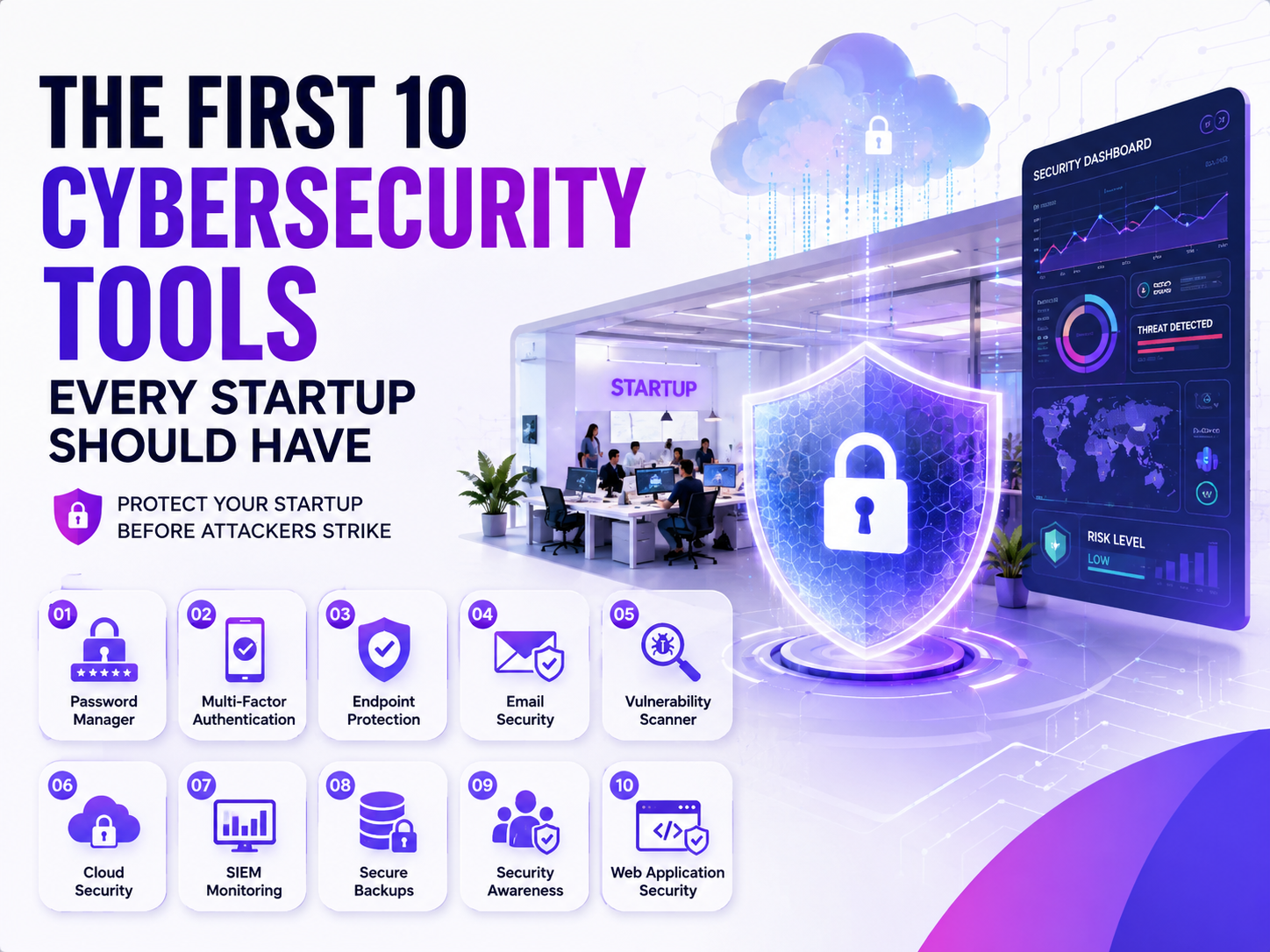
This guide explores the first 10 cybersecurity tools every startup should have, why they matter, and how they work together to create a layered defense strategy without requiring an enterprise-level budget.
Why Every Startup Needs Cybersecurity from Day One
Many founders believe cybercriminals only target large corporations. In reality, attackers often prefer startups because security programs are still developing.
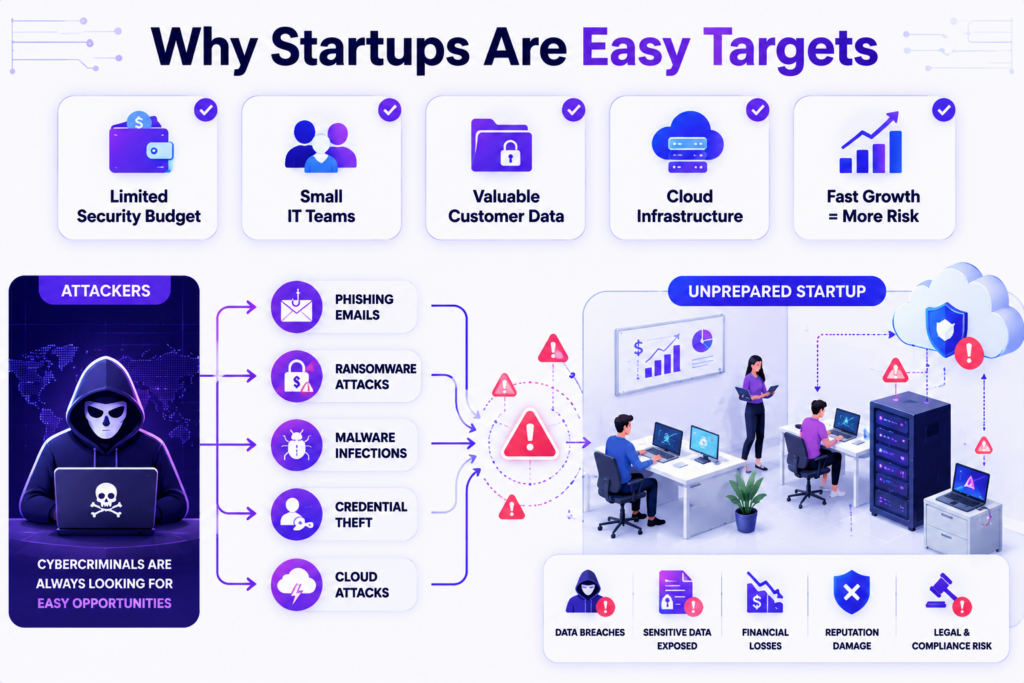
Startups typically handle:
- Customer information
- Financial records
- Cloud infrastructure
- Intellectual property
- API credentials
- Source code repositories
- Employee identities
Each of these assets represents potential value to attackers.
Rather than relying on a single security product, startups should build a defense-in-depth strategy where multiple security layers reduce overall risk.
The first 10 cybersecurity tools every startup should have cover identity protection, endpoint security, email security, vulnerability management, backups, monitoring, and employee awareness.
1. Password Manager
Passwords remain one of the weakest security points inside any organization.
Employees frequently:
- Reuse passwords
- Choose weak passwords
- Store passwords in browsers
- Share credentials through chat
- Use predictable combinations
A business password manager eliminates many of these risks.
Key Benefits
- Secure password vault
- Strong password generation
- Secure credential sharing
- Multi-device synchronization
- Role-based access
- Audit logs
Combined with strong authentication policies recommended by the NIST Digital Identity Guidelines, password managers significantly reduce credential-related attacks.
2. Multi-Factor Authentication (MFA)
Even strong passwords can be stolen.
Attackers commonly obtain credentials through:
- Phishing
- Malware
- Data breaches
- Credential stuffing
- Social engineering
Multi-factor authentication adds another verification step before account access.
Common authentication factors include:
- Authentication apps
- Hardware security keys
- Biometric verification
- One-time verification codes
Today, enabling MFA across business applications is considered one of the highest-impact cybersecurity improvements.
3. Endpoint Protection Platform (EPP)
Every laptop, desktop, and mobile device becomes a potential attack surface.
Modern endpoint protection goes far beyond traditional antivirus software.
Today’s endpoint security solutions provide:
- Malware detection
- Behavioral analysis
- Ransomware protection
- Device isolation
- Real-time monitoring
- Threat intelligence
As your startup grows, endpoint protection becomes essential for securing remote employees and hybrid work environments.
4. Email Security Platform
Email remains the most common entry point for cyberattacks.
Attackers continuously attempt to deliver:
- Phishing emails
- Malware attachments
- Credential harvesting links
- Business email compromise attacks
A dedicated email security platform helps detect suspicious messages before they reach employees.
Features often include:
- Spam filtering
- URL analysis
- Attachment sandboxing
- Domain authentication
- Anti-phishing protection
Learning how attackers evolve these techniques is equally important. The security articles available in the Botdef security blog can help startups stay informed about emerging phishing campaigns and modern cyberattack trends.
5. Vulnerability Scanner
Unknown vulnerabilities often remain hidden for months.
Regular vulnerability scanning identifies weaknesses before attackers exploit them.
These tools typically scan:
- Servers
- Web applications
- Cloud resources
- Internal networks
- Operating systems
Reports generally prioritize issues based on severity, allowing security teams to address the most critical risks first.
Following guidance from the Cybersecurity and Infrastructure Security Agency (CISA) helps organizations understand which vulnerabilities require immediate attention.
6. Cloud Security Monitoring
Nearly every startup relies on cloud infrastructure.
Whether using virtual machines, containers, storage services, or managed databases, cloud environments require continuous monitoring.
Cloud security tools help identify:
- Misconfigured storage
- Publicly exposed services
- Weak IAM permissions
- Excessive privileges
- Compliance issues
- Suspicious activity
Misconfigurations remain one of the leading causes of cloud-related security incidents.
Continuous monitoring dramatically reduces this risk.
7. Security Information and Event Management (SIEM)
As startups expand, security events increase rapidly.
Instead of reviewing logs manually, SIEM platforms collect information from:
- Servers
- Firewalls
- Cloud services
- Applications
- Endpoints
- Authentication systems
The platform correlates activity across systems to detect suspicious behavior.
Examples include:
- Multiple failed login attempts
- Impossible travel logins
- Privilege escalation
- Data exfiltration
- Malware indicators
Although full enterprise SIEM solutions can be expensive, lightweight managed alternatives are increasingly available for startups.
8. Backup and Disaster Recovery Solution
Backups remain one of the simplest yet most effective cybersecurity investments.
Without reliable backups, ransomware incidents can permanently destroy critical business information.
An effective backup strategy should include:
- Automatic backups
- Encrypted storage
- Version history
- Off-site copies
- Recovery testing
The widely recommended 3-2-1 backup rule suggests maintaining:
- Three copies of data
- Two different storage types
- One off-site backup
Regular recovery testing is equally important because backups that cannot be restored provide little protection.
9. Employee Security Awareness Training
Technology alone cannot stop cyberattacks.
Employees remain one of the most targeted attack vectors.
Security awareness training teaches staff to recognize:
- Phishing attempts
- Social engineering
- Fake invoices
- Credential theft
- Suspicious downloads
- USB attacks
Training should become an ongoing process rather than an annual compliance exercise.
Organizations that conduct regular phishing simulations often improve employee awareness significantly over time.
10. Web Application Security Testing (WAST)
Many startups build customer-facing web applications.
These applications frequently process:
- Customer accounts
- Payment information
- Sensitive business data
- API requests
Web application security testing identifies vulnerabilities such as:
- SQL Injection
- Cross-Site Scripting (XSS)
- Authentication flaws
- Broken access control
- Insecure APIs
Regular testing throughout development helps identify issues before deployment, reducing both remediation costs and security risks.
Building a Layered Cybersecurity Strategy
No single product prevents every cyberattack.
Instead, startups should combine multiple security layers.
A practical security stack includes:
| Security Area | Recommended Tool |
|---|---|
| Identity | Password Manager |
| Authentication | Multi-Factor Authentication |
| Devices | Endpoint Protection |
| Email Security | |
| Infrastructure | Vulnerability Scanner |
| Cloud | Cloud Security Monitoring |
| Detection | SIEM |
| Recovery | Backup Solution |
| Employees | Security Awareness Platform |
| Applications | Web Application Security Testing |
Each layer addresses different attack techniques while supporting the others.
Common Mistakes Startups Should Avoid
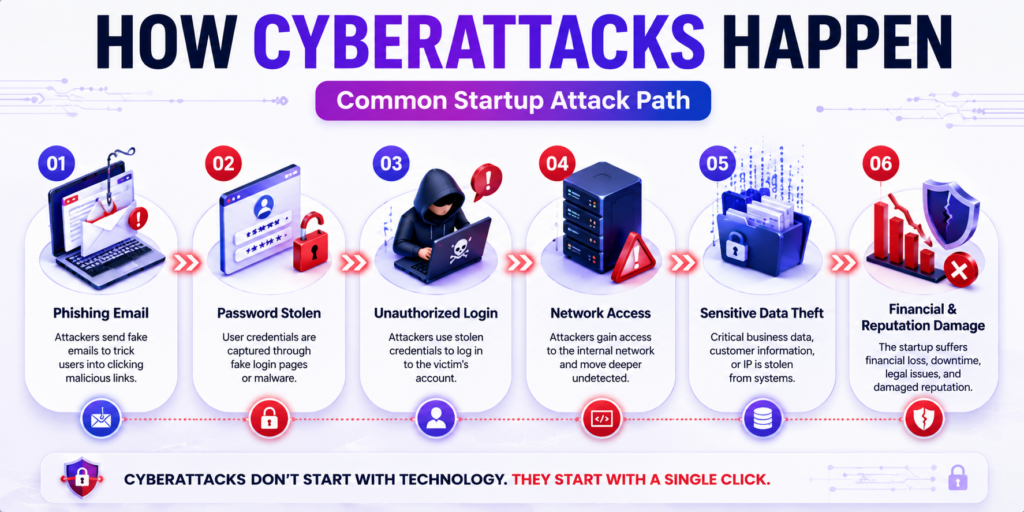
Even with security tools in place, several mistakes continue to expose businesses to unnecessary risks.
Buying Too Many Tools
More software does not always improve security. Start with essential protections and expand strategically.
Ignoring Updates
Unpatched systems remain among the easiest targets for attackers.
Weak Access Controls
Grant employees only the permissions they require.
No Incident Response Plan
Prepare for incidents before they happen. Clearly define responsibilities, communication procedures, and recovery steps.
Skipping Security Audits
Regular assessments reveal security gaps that daily operations may overlook.
How to Prioritize Cybersecurity Investments
If your startup has a limited security budget, begin with controls that provide the highest return on investment.
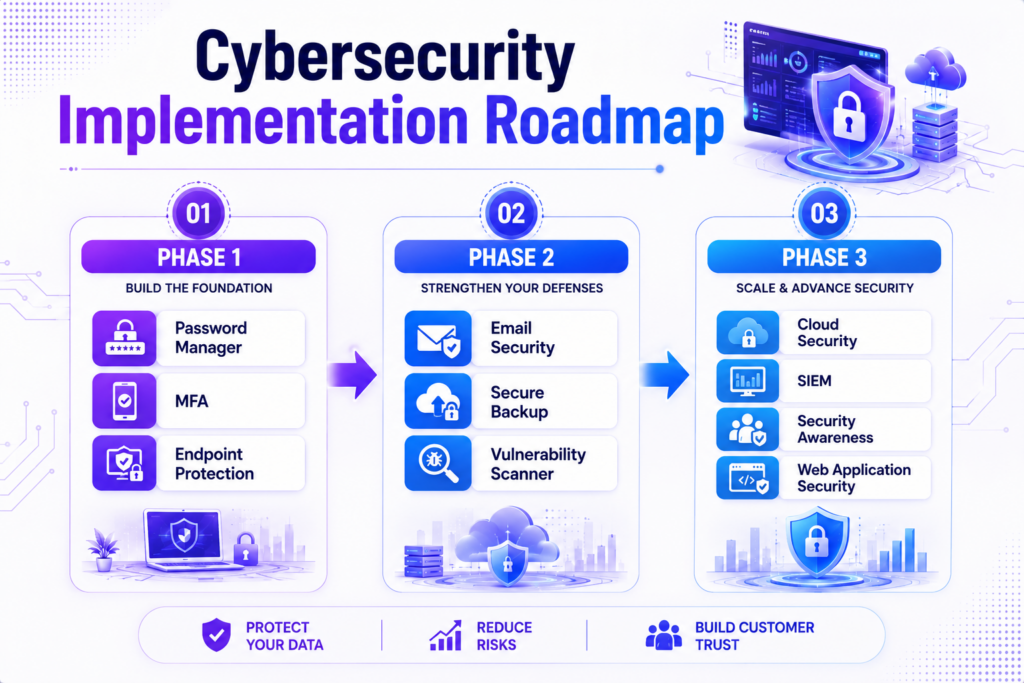
A recommended implementation order is:
- Password Manager
- Multi-Factor Authentication
- Endpoint Protection
- Email Security
- Backup Solution
- Vulnerability Scanner
- Security Awareness Training
- Cloud Security Monitoring
- SIEM
- Web Application Security Testing
This phased approach allows organizations to strengthen security without overwhelming teams or budgets.
Final Thoughts
Implementing the first 10 cybersecurity tools every startup should have is not about eliminating every possible risk—it is about significantly reducing the likelihood and impact of common cyber threats.
Cybersecurity should evolve alongside your business. As your startup grows, so should your security program, incorporating regular assessments, employee education, and continuous monitoring.
Staying informed is equally important. Resources such as the latest cybersecurity updates and security insights on Botdef can help startups keep pace with emerging threats, security best practices, and evolving defensive strategies. By combining trusted knowledge with the right security tools, startups can build resilience, protect customer trust, and create a strong foundation for sustainable growth.