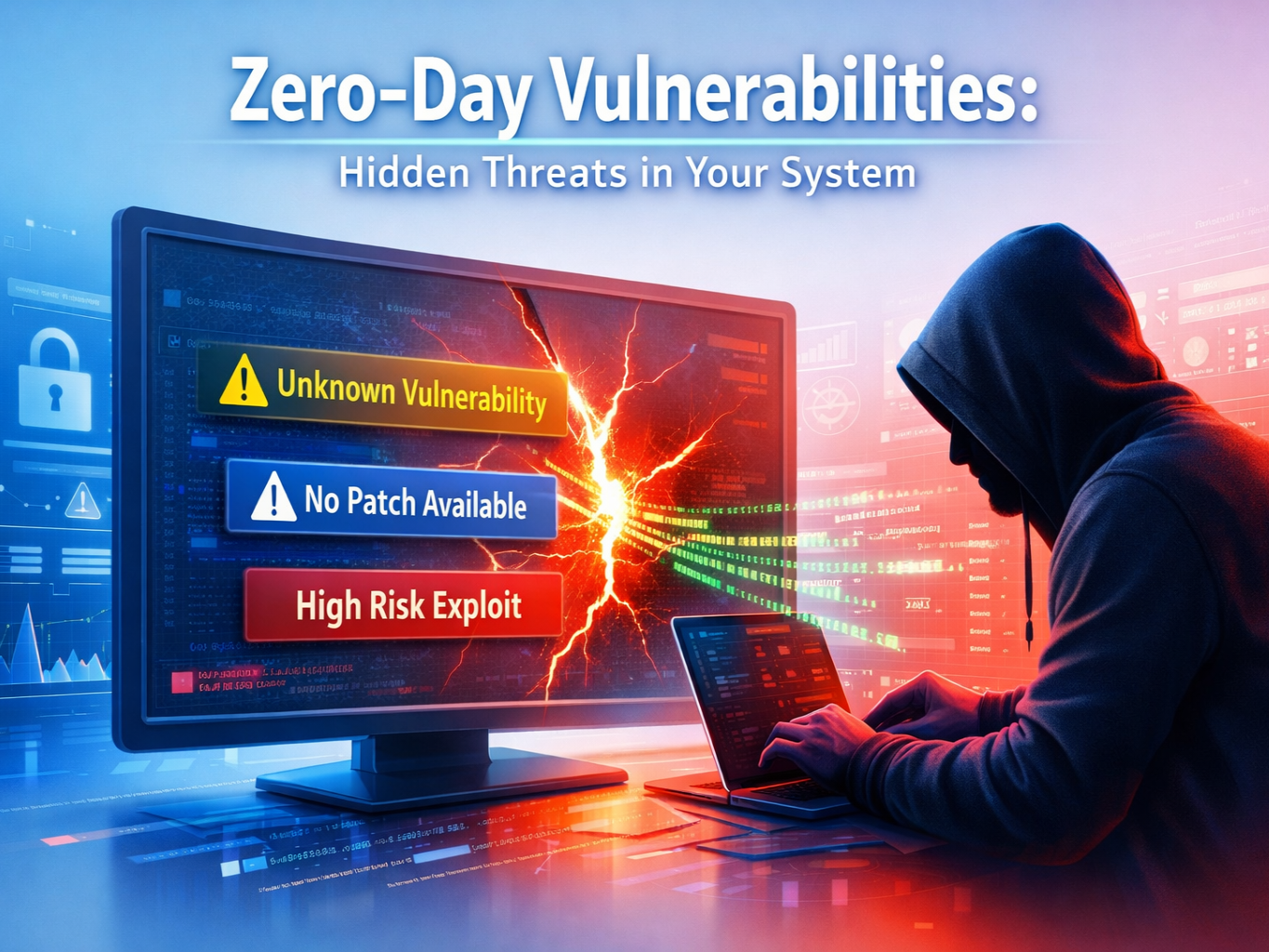
In today’s digital world, staying secure isn’t just an option—it’s a necessity. This blog is your go-to source for the latest security updates and insights. As cyber threats continue to evolve, zero-day vulnerabilities have emerged as one of the most dangerous attack vectors. These hidden flaws can be exploited before developers even realize they exist, leaving systems exposed and organizations vulnerable.
For readers looking to stay ahead in cybersecurity, platforms like BotDef’s security insights provide ongoing updates, threat intelligence, and practical strategies to strengthen digital defenses.
In this blog, we will explore what zero-day vulnerabilities are, how hackers exploit them, and—most importantly—how you can protect your systems against these invisible threats.
What Are Zero-Day Vulnerabilities?
A zero-day vulnerability refers to a security flaw in software, hardware, or firmware that is unknown to the vendor or developer. Since the issue is undiscovered, no patch or fix is available—giving attackers a “zero-day” window to exploit it.
Why Are They Called “Zero-Day”?
The term “zero-day” comes from the fact that developers have had zero days to fix the vulnerability once it becomes known.
Key Characteristics
- Unknown to developers or security teams
- No available patch at the time of discovery
- Highly valuable in cybercrime and cyber warfare
- Often exploited silently and strategically
Because of their stealthy nature, zero-day vulnerabilities are particularly dangerous for enterprises, governments, and even small businesses.
How Zero-Day Vulnerabilities Are Discovered
Before exploitation, attackers must first discover these vulnerabilities. This process is often complex and requires advanced technical skills.
1. Code Analysis
Hackers analyze application code to identify weaknesses such as:
- Buffer overflows
- Improper input validation
- Memory corruption issues
2. Fuzz Testing
Attackers use automated tools to input random or unexpected data into systems to trigger abnormal behavior.
3. Reverse Engineering
By deconstructing software binaries, attackers uncover hidden flaws that may not be visible in source code.
4. Exploit Markets
Some cybercriminals purchase zero-day vulnerabilities from underground marketplaces or brokers.
According to research shared by the National Institute of Standards and Technology (NIST), vulnerability discovery and disclosure remain critical challenges in modern cybersecurity ecosystems.
How Hackers Exploit Zero-Day Vulnerabilities
Once a zero-day vulnerability is discovered, attackers move quickly to exploit it before it is patched.
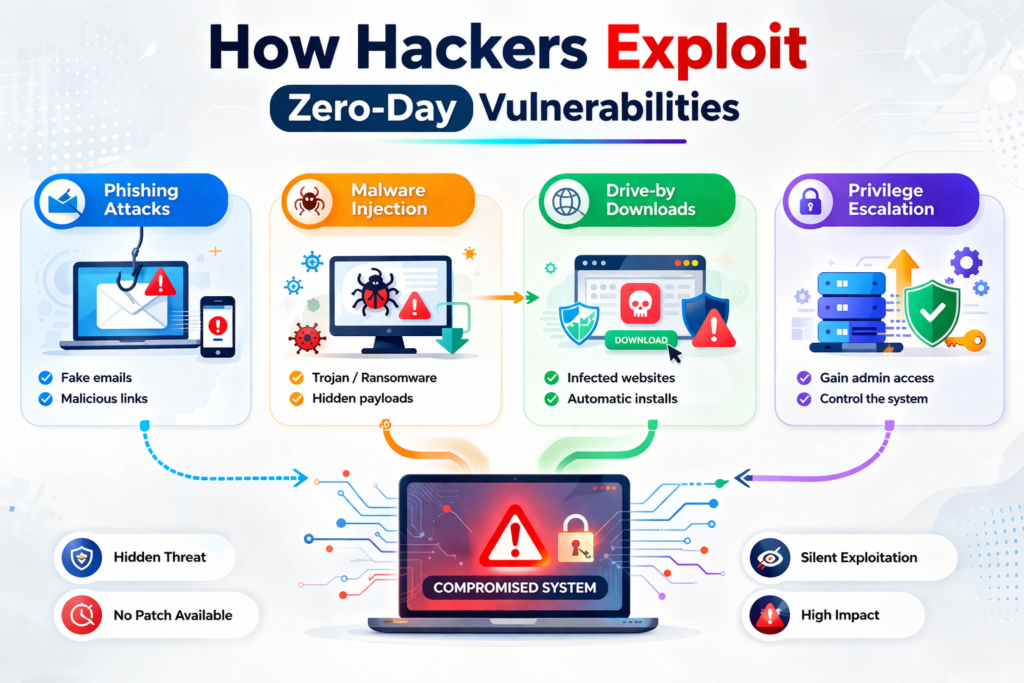
Zero-Day Vulnerabilities Exploitation Techniques
1. Targeted Attacks
Hackers often use zero-day vulnerabilities in highly targeted attacks against:
- Government organizations
- Financial institutions
- Large enterprises
These attacks are typically part of advanced persistent threats (APTs).
2. Malware Injection
Attackers embed exploit code into malware that takes advantage of the vulnerability when executed.
3. Drive-By Downloads
Users unknowingly download malicious code simply by visiting compromised websites.
4. Phishing Campaigns
Zero-day exploits are often delivered through phishing emails with malicious attachments or links.
5. Privilege Escalation
Attackers exploit vulnerabilities to gain higher access levels within a system.
Real-World Examples of Zero-Day Attacks
Understanding real-world incidents helps illustrate the severity of zero-day vulnerabilities.
Stuxnet Worm
One of the most famous zero-day attacks, Stuxnet targeted industrial control systems and used multiple zero-day vulnerabilities to spread undetected.
WannaCry Ransomware
Although not purely zero-day, WannaCry leveraged previously unknown vulnerabilities to spread rapidly across networks.
Browser Exploits
Modern browsers are frequent targets due to their widespread use and access to sensitive data.
For deeper insights into evolving threats and attack patterns, resources like CISA’s cybersecurity advisories offer authoritative and up-to-date information.
Why Zero-Day Vulnerabilities Are So Dangerous
Zero-day vulnerabilities pose unique challenges compared to known threats.
No Immediate Defense
Since no patch exists, traditional defenses like antivirus software may fail.
High Success Rate
Attackers face minimal resistance, increasing the likelihood of successful breaches.
Silent Exploitation
Many zero-day attacks remain undetected for extended periods.
High Value in Cybercrime
Zero-day exploits can be sold for thousands—or even millions—on the dark web.
How to Detect Zero-Day Attacks
Although detecting zero-day vulnerabilities is difficult, organizations can identify suspicious activity using advanced techniques.
Behavioral Analysis
Monitoring unusual system behavior can help detect anomalies.
Endpoint Detection and Response (EDR)
EDR tools track endpoint activities and flag suspicious patterns.
Network Traffic Monitoring
Analyzing traffic can reveal unusual communication or data exfiltration.
Threat Intelligence
Staying updated with threat intelligence feeds helps identify emerging risks.
At this stage, many security-focused platforms and blogs—such as detailed resources available through BotDef’s cybersecurity blog section—help professionals stay informed about detection strategies and evolving threats.
How to Protect Against Zero-Day Vulnerabilities
While you cannot prevent unknown vulnerabilities, you can significantly reduce risk.
1. Implement Strong Security Layers
Adopt a defense-in-depth strategy, including:
- Firewalls
- Intrusion detection systems
- Endpoint protection
2. Regular Software Updates
Even though zero-day vulnerabilities are unpatched initially, keeping systems updated reduces exposure to known threats.
3. Use Least Privilege Access
Limit user permissions to reduce the impact of exploitation.
4. Network Segmentation
Isolate critical systems to prevent lateral movement.
5. Security Awareness Training
Educate employees to recognize phishing attempts and suspicious activities.
6. Patch Management Strategy
Quickly apply patches once vulnerabilities are disclosed.
Role of AI and Automation in Handling Zero-Day Threats
Modern cybersecurity increasingly relies on AI and automation.
AI-Powered Threat Detection
Machine learning models can detect anomalies and predict potential threats.
Automated Incident Response
Automation helps respond to threats faster, minimizing damage.
Predictive Analysis
AI can identify patterns that may indicate future vulnerabilities.
As cybersecurity evolves, integrating intelligent systems becomes essential for handling unknown threats like zero-day vulnerabilities.
Challenges in Managing Zero-Day Vulnerabilities
Despite advancements, several challenges remain.
Lack of Visibility
Organizations often lack visibility into all assets and systems.
Resource Constraints
Small businesses may not have the resources to implement advanced security solutions.
Delayed Response
Even after discovery, patch deployment can take time.
Evolving Threat Landscape
Hackers continuously develop new techniques, making defense more complex.
The Future of Zero-Day Security
The future of cybersecurity will likely focus on proactive rather than reactive strategies.
Key Trends to Watch
- Increased use of AI-driven security tools
- Greater emphasis on threat intelligence sharing
- Improved vulnerability disclosure programs
- Stronger collaboration between organizations
As threats become more sophisticated, staying informed and prepared is critical.
Conclusion
Zero-day vulnerabilities represent one of the most critical challenges in modern cybersecurity. Because they are unknown and unpatched, they offer attackers a powerful advantage. However, by understanding how zero-day vulnerabilities are exploited, organizations and individuals can take proactive steps to minimize risk.
From implementing layered security measures to leveraging AI-driven tools, the key lies in preparedness and awareness. Moreover, staying updated through trusted cybersecurity platforms—such as insights and resources available at BotDef’s threat intelligence pages—can make a significant difference in defending against emerging threats.
Ultimately, cybersecurity is not a one-time effort but an ongoing process. The more informed you are, the better equipped you will be to handle even the most sophisticated attacks.