In today’s digital world, staying secure isn’t just an option—it’s a necessity. As organizations increasingly rely on cloud platforms, APIs, and interconnected systems, the question is no longer whether to invest in cybersecurity, but how much and how effectively. Businesses that actively monitor evolving threats and follow expert-driven insights—such as those shared on platforms like BotDef’s cybersecurity insights hub—are better positioned to make informed security decisions.
Yet, many decision-makers still hesitate. Cybersecurity is often seen as a cost center rather than a value driver. However, when compared to the devastating consequences of a data breach, the return on investment (ROI) of cybersecurity becomes strikingly clear.
This blog explores the cost of cybersecurity vs. cost of a breach, breaking down the financial, operational, and reputational implications while explaining how organizations can calculate and maximize their cybersecurity ROI.
Understanding the Cost of Cybersecurity vs. Cost of a Breach
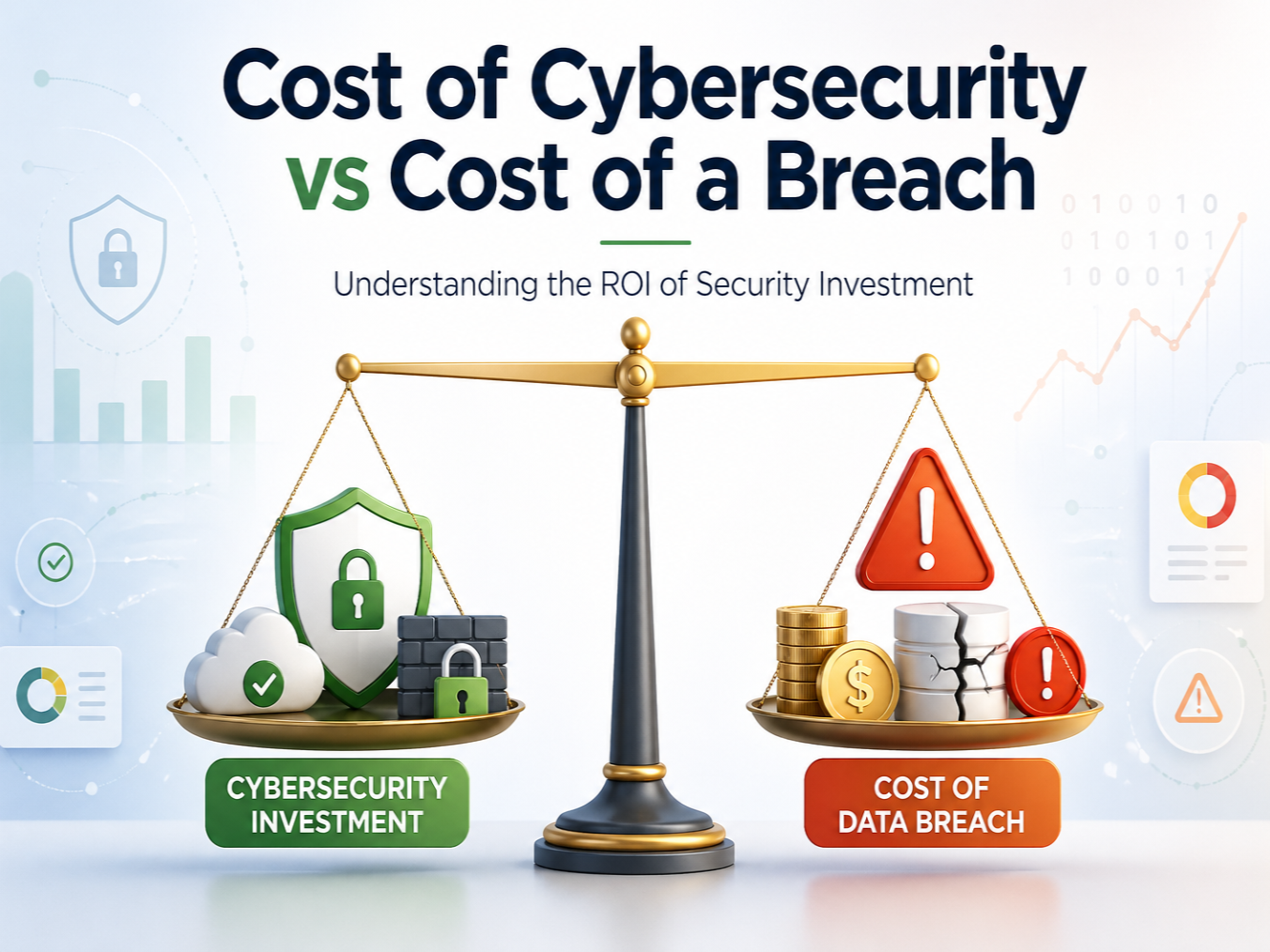
The phrase cost of cybersecurity vs. cost of a breach reflects a fundamental business dilemma: invest proactively in protection or risk paying exponentially more after an incident.
On one side, cybersecurity investments include:
- Security tools (firewalls, endpoint protection, SIEM systems)
- Skilled personnel and training
- Compliance and audit costs
- Ongoing monitoring and maintenance
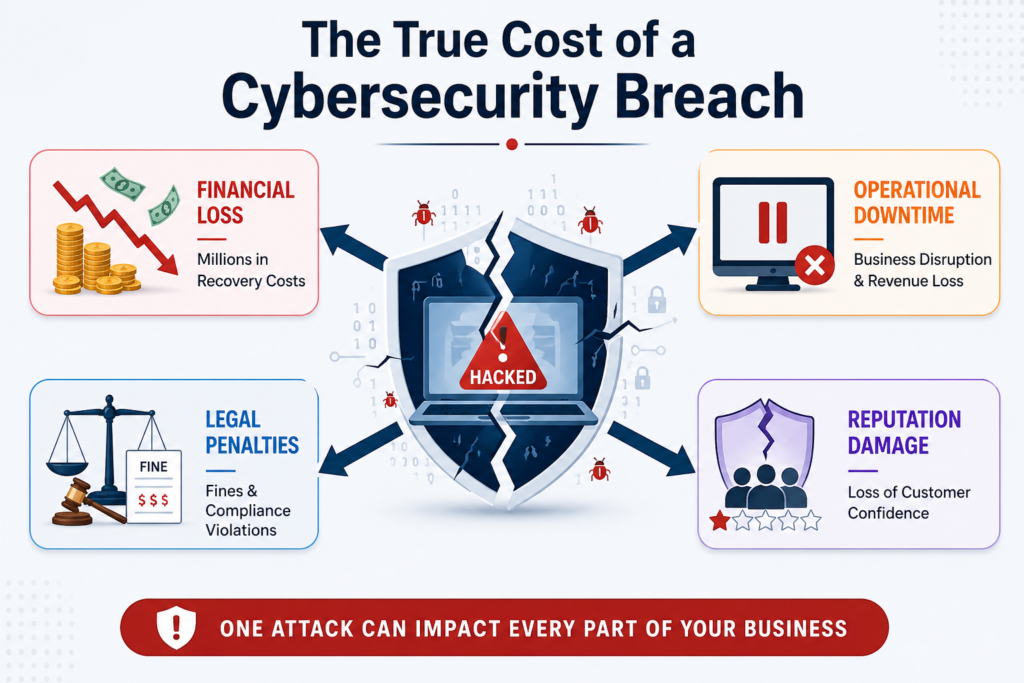
On the other side, a breach can result in:
- Financial losses
- Legal penalties
- Operational disruption
- Loss of customer trust
According to IBM’s annual report on data breaches, the average cost of a data breach continues to rise globally. This makes it evident that cybersecurity is not an expense—it’s a strategic investment.
Breaking Down Cybersecurity Costs
1. Technology Investments
Modern cybersecurity requires a layered defense approach. Organizations typically invest in:
- Endpoint detection and response (EDR)
- Network security tools
- Cloud security solutions
- Identity and access management (IAM)
While these tools come at a cost, they significantly reduce the attack surface.
2. Human Resources and Expertise
Cybersecurity is not just about tools—it’s about people.
Organizations must invest in:
- Security analysts
- Incident response teams
- Continuous employee training
Human error remains one of the leading causes of breaches. Therefore, training programs are essential for minimizing risk.
3. Compliance and Regulatory Costs
Businesses must adhere to data protection laws and standards. These may include:
- GDPR
- ISO 27001
- SOC 2
Compliance requires regular audits, documentation, and process improvements.
4. Continuous Monitoring and Maintenance
Cyber threats evolve rapidly. Therefore, cybersecurity requires ongoing:
- Threat intelligence
- Vulnerability scanning
- System updates
Many organizations now rely on proactive security strategies highlighted in resources such as BotDef’s threat monitoring solutions to maintain resilience.
The True Cost of a Cybersecurity Breach
While cybersecurity costs are predictable and controllable, breach costs are chaotic and often catastrophic.
1. Direct Financial Loss
This includes:
- Stolen funds
- Fraudulent transactions
- Incident response expenses
Companies often spend millions recovering from a single breach.
2. Legal and Regulatory Penalties
Failure to protect sensitive data can result in heavy fines.
For example:
- GDPR penalties can reach up to 4% of annual global turnover
- Legal fees and settlements add additional burden
3. Operational Downtime
A cyberattack can bring operations to a halt.
- Systems may be locked (ransomware)
- Services may become unavailable
- Productivity drops significantly
Even a few hours of downtime can result in substantial losses.
4. Reputational Damage
Trust is hard to build—and easy to lose.
Customers are less likely to engage with brands that fail to protect their data. Long-term brand damage often outweighs immediate financial losses.
5. Loss of Intellectual Property
For tech-driven businesses, stolen data can include:
- Source code
- Trade secrets
- Product designs
This can severely impact competitive advantage.
Cybersecurity ROI: Why Prevention Is More Cost-Effective
When comparing the cost of cybersecurity vs. cost of a breach, prevention consistently proves more economical.
Key ROI Benefits of Cybersecurity Investment
- Reduced risk exposure: Fewer vulnerabilities mean fewer successful attacks
- Business continuity: Strong defenses prevent downtime
- Customer trust: Security builds brand credibility
- Regulatory compliance: Avoid fines and penalties
- Faster recovery times: Prepared systems recover quickly
In fact, organizations that adopt proactive cybersecurity strategies often detect and contain threats faster. Insights shared through trusted platforms like BotDef’s security blogs emphasize how early detection significantly reduces breach costs.
Real-World Scenario: Prevention vs. Reaction
Consider two companies:
Company A (Proactive Approach)
- Invests in cybersecurity tools and training
- Implements real-time monitoring
- Conducts regular audits
Outcome:
A phishing attempt is detected early. Minimal impact, negligible cost.
Company B (Reactive Approach)
- Limited security investment
- No employee training
- No monitoring system
Outcome:
A ransomware attack shuts down operations for days. The company pays ransom, loses data, and suffers reputational damage.
This comparison clearly illustrates the ROI of cybersecurity.
How to Calculate Cybersecurity ROI
Calculating ROI in cybersecurity can be complex, but a simplified approach includes:
Step 1: Estimate Potential Losses
Consider:
- Average breach cost
- Downtime impact
- Legal penalties
Step 2: Calculate Security Investment
Include:
- Tools and technologies
- Staff salaries
- Training programs
Step 3: Measure Risk Reduction
Assess how much your security measures reduce the likelihood of a breach.
Step 4: ROI Formula
ROI = (Risk Reduction Value – Security Investment) / Security Investment
Although not exact, this formula helps businesses understand the financial value of cybersecurity.
Key Factors That Influence Cybersecurity ROI
1. Industry Type
Industries like finance, healthcare, and e-commerce face higher risks and therefore see greater ROI from cybersecurity investments.
2. Organization Size
Larger organizations often face more complex threats, but small businesses are also prime targets due to weaker defenses.
3. Threat Landscape
As cyber threats evolve, ROI increases because the cost of potential attacks rises.
According to guidance from the Cybersecurity & Infrastructure Security Agency, adopting proactive defense strategies significantly reduces organizational risk.
Common Mistakes Businesses Make
Despite clear benefits, many organizations miscalculate cybersecurity ROI.
Mistake 1: Treating Security as an Expense
Cybersecurity should be viewed as a long-term investment, not a cost burden.
Mistake 2: Underestimating Threats
Ignoring potential risks can lead to devastating consequences.
Mistake 3: Lack of Employee Training
Even the best tools fail if employees are unaware of security practices.
Mistake 4: Reactive Approach
Waiting for a breach to occur is the most expensive strategy.
Strategies to Maximize Cybersecurity ROI
To fully benefit from cybersecurity investments, organizations should:
1. Adopt a Proactive Security Model
Implement continuous monitoring and threat detection.
2. Invest in Employee Awareness
Regular training reduces human error.
3. Use Automation and AI
Automation improves efficiency and reduces response time.
4. Regularly Update Security Systems
Outdated systems are easy targets.
5. Conduct Risk Assessments
Identify vulnerabilities before attackers do.
The Future of Cybersecurity Investment
As digital transformation accelerates, cybersecurity will become even more critical.
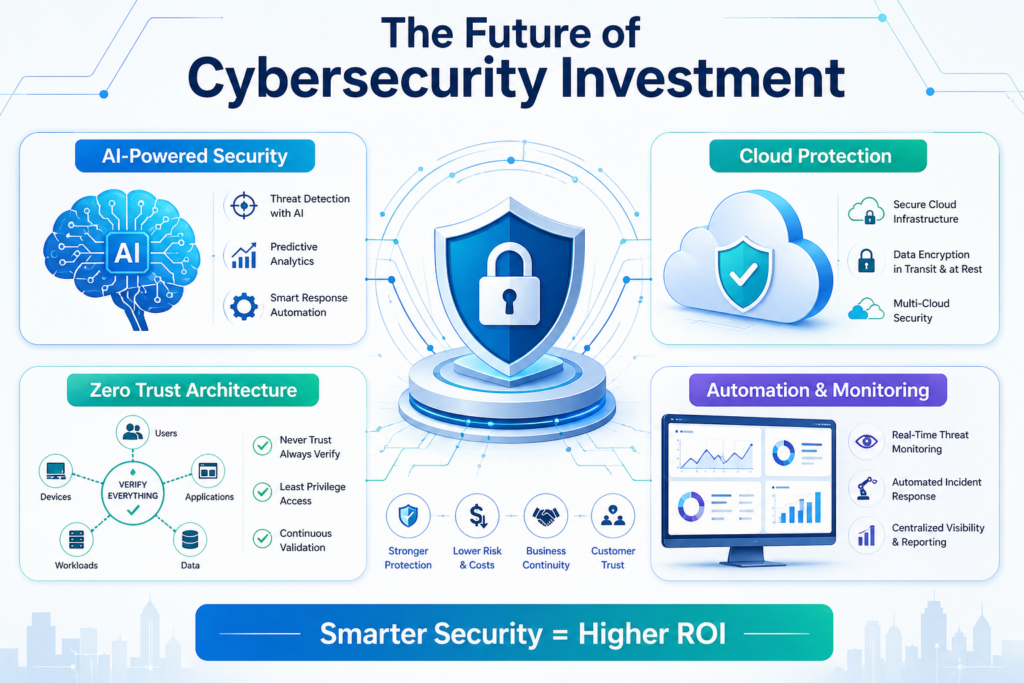
Key trends include:
- AI-driven threat detection
- Zero Trust architecture
- Cloud-native security solutions
- Increased regulatory requirements
Organizations that invest early will gain a competitive advantage, while those that delay may face higher breach costs.
Conclusion: Cost of Cybersecurity vs. Cost of a Breach
The debate around the cost of cybersecurity vs. cost of a breach is no longer theoretical—it’s a real business decision with measurable consequences.
Cybersecurity investments may seem significant upfront. However, when compared to the financial, operational, and reputational damage caused by a breach, the ROI becomes undeniable.
Businesses that prioritize security:
- Reduce risk
- Protect customer trust
- Ensure long-term sustainability
Ultimately, cybersecurity is not just about protection—it’s about enabling growth in a secure and resilient digital environment. Organizations seeking reliable guidance and practical solutions can explore advanced approaches through platforms like BotDef’s security solutions, which highlight modern strategies for staying ahead of evolving threats.