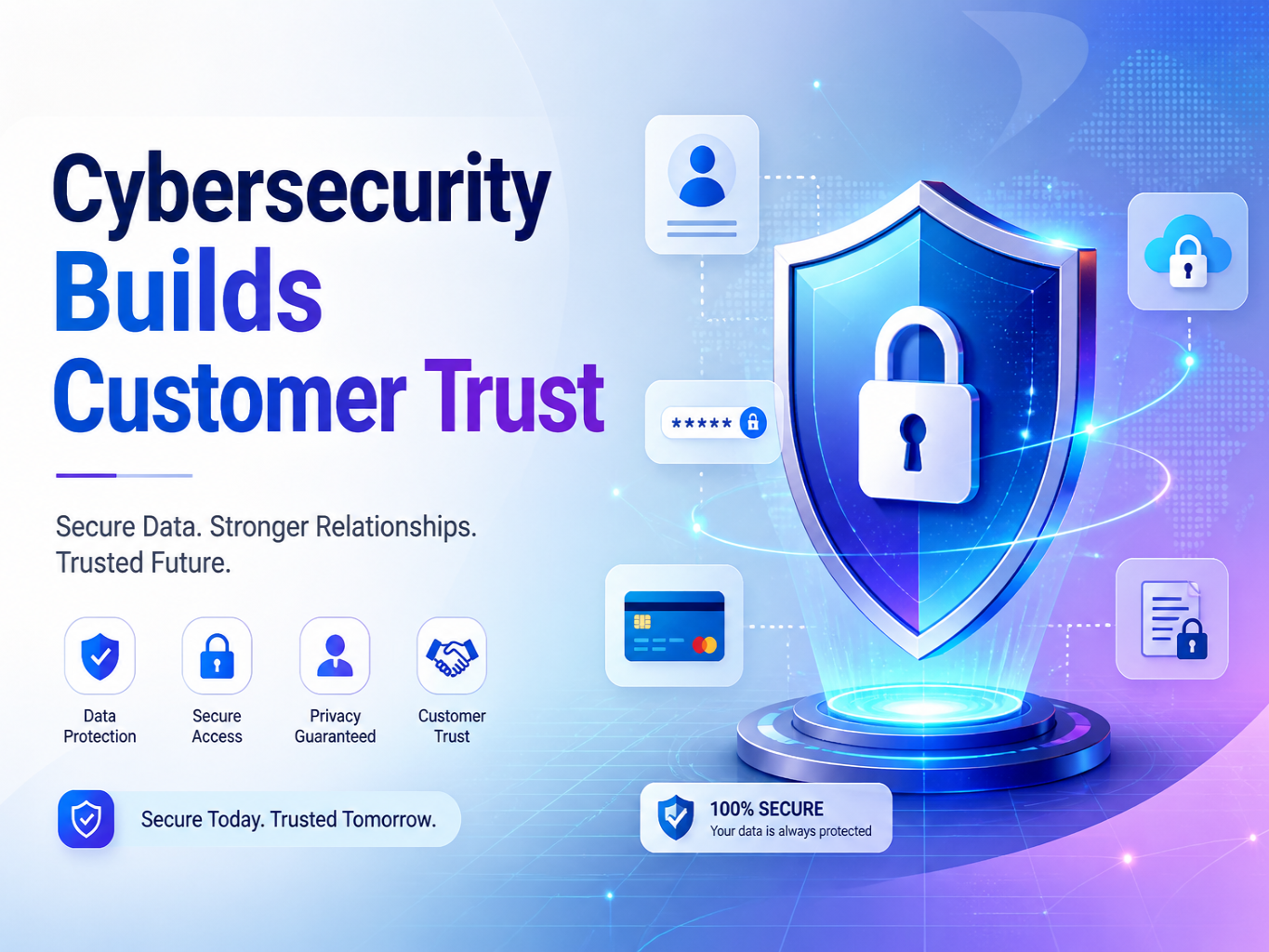
In today’s digital-first economy, trust has become one of the most valuable currencies a business can earn. Customers are no longer just evaluating products or services—they are evaluating how securely their data is handled. This is where Cybersecurity’s Role in Building Customer Trust becomes not just relevant, but essential.
At the same time, platforms like BotDef emphasize a critical truth: In today’s digital world, staying secure isn’t just an option—it’s a necessity. This blog is your go-to source for the latest security updates and insights. Businesses that actively invest in cybersecurity are not only protecting their systems—they are actively building long-term relationships with their customers.
Let’s explore how cybersecurity directly impacts trust, why it matters more than ever, and how organizations can leverage it as a competitive advantage.
Why Customer Trust Depends on Cybersecurity
Customer trust is built on reliability, transparency, and safety. However, in the digital landscape, data security acts as the foundation of all three.
When users share personal information—whether it’s email addresses, payment details, or behavioral data—they expect:
- Secure storage of their data
- Protection from breaches and unauthorized access
- Responsible usage of their information
If any of these expectations are broken, trust collapses instantly.
The Rising Cost of Data Breaches
Data breaches are no longer rare incidents. According to IBM’s Cost of a Data Breach Report, the average cost of a breach continues to rise globally, impacting not just finances but brand reputation as well.
More importantly, customers remember:
- 83% of consumers say they will stop interacting with a brand after a data breach
- Recovery of trust often takes years—if it happens at all
Therefore, cybersecurity is no longer a backend IT function—it’s a front-facing trust signal.
Understanding Cybersecurity’s Role in Building Customer Trust
1. Protecting Sensitive Customer Data
The most direct way cybersecurity builds trust is by safeguarding sensitive information.
Businesses collect various types of data:
- Personal identification details
- Payment and financial data
- Behavioral and usage data
Strong cybersecurity practices such as encryption, secure authentication, and data masking ensure that this information stays protected.
When customers feel their data is safe, they are more likely to:
- Complete transactions
- Share accurate information
- Stay loyal to the platform
2. Ensuring Business Continuity
Cyberattacks such as ransomware or Distributed Denial of Service (DDoS) attacks can bring operations to a halt.
Downtime leads to:
- Interrupted services
- Loss of customer confidence
- Negative user experience
However, organizations that implement strong cybersecurity measures—including monitoring systems and automated threat detection—can prevent such disruptions.
For example, many modern security platforms discussed in resources like BotDef’s security insights highlight how proactive threat detection reduces downtime and enhances reliability.
3. Enhancing Transparency and Compliance
Customers today are more aware of data privacy regulations like GDPR and other global standards.
Companies that demonstrate:
- Compliance with regulations
- Clear privacy policies
- Transparent data handling practices
are seen as more trustworthy.
Cybersecurity frameworks help businesses align with these regulations and communicate their efforts effectively.
The Psychological Impact of Security on Customers
Trust is not just logical—it’s emotional.
When users see signs of strong cybersecurity, such as:
- HTTPS encryption
- Two-factor authentication
- Security badges and certifications
they subconsciously feel safer interacting with the platform.
On the other hand, even minor security warnings (like “Not Secure” in a browser) can immediately discourage users.
Trust Signals That Matter
Some key trust-building signals include:
- Secure login systems
- Regular security updates
- Visible commitment to privacy
- Prompt communication during incidents
According to the National Institute of Standards and Technology (NIST), organizations that follow structured cybersecurity frameworks significantly improve both security posture and user trust.
How Cybersecurity Drives Customer Loyalty
Trust leads to loyalty—and loyalty drives long-term business success.
When customers trust a platform:
- They are more likely to return
- They recommend it to others
- They engage more deeply with services
Cybersecurity plays a silent yet powerful role in this cycle.
Real Impact on Retention
A secure platform reduces:
- Fear of data misuse
- Hesitation during transactions
- Concerns about identity theft
As a result, customers develop a sense of reliability and comfort.
Key Cybersecurity Practices That Build Trust
To effectively leverage Cybersecurity’s Role in Building Customer Trust, businesses must implement practical strategies.
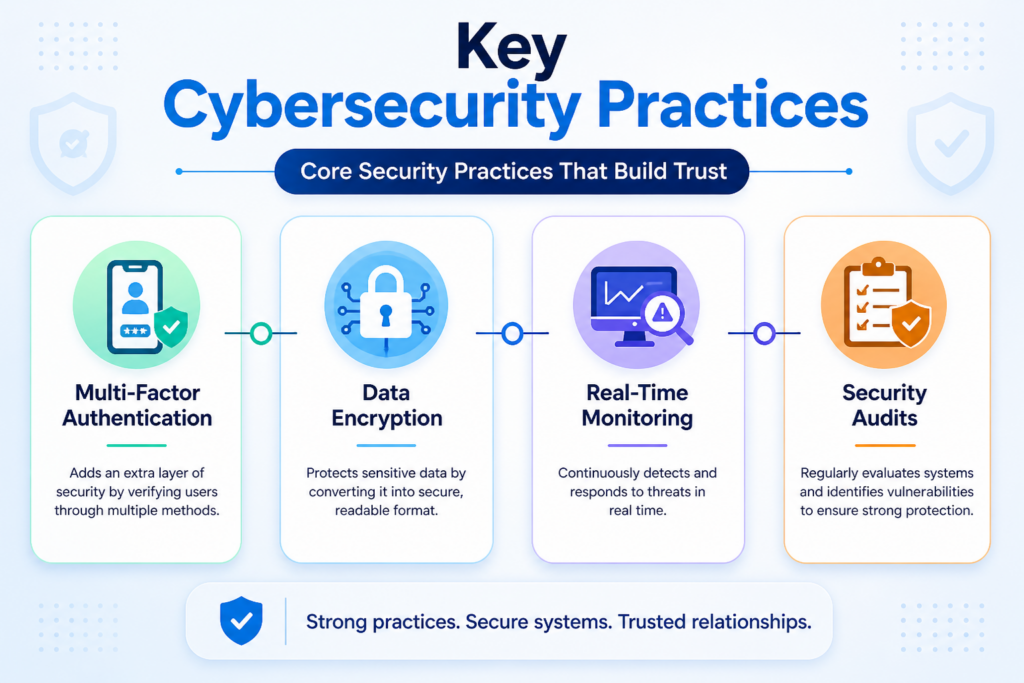
1. Strong Authentication Mechanisms
- Multi-factor authentication (MFA)
- Biometric verification
- Secure password policies
These measures prevent unauthorized access and reassure users.
2. Data Encryption
Encryption ensures that even if data is intercepted, it cannot be read.
Types include:
- End-to-end encryption
- Data-at-rest encryption
- Secure communication protocols
3. Regular Security Audits
Continuous evaluation helps identify vulnerabilities before attackers do.
Best practices include:
- Penetration testing
- Vulnerability assessments
- Compliance checks
4. Real-Time Threat Monitoring
Modern cybersecurity tools use AI and automation to detect threats instantly.
This enables:
- Faster response times
- Reduced damage from attacks
- Improved system resilience
5. Employee Awareness and Training
Human error remains one of the biggest security risks.
Training employees on:
- Phishing attacks
- Secure data handling
- Password management
can significantly reduce vulnerabilities.
Cybersecurity as a Competitive Advantage
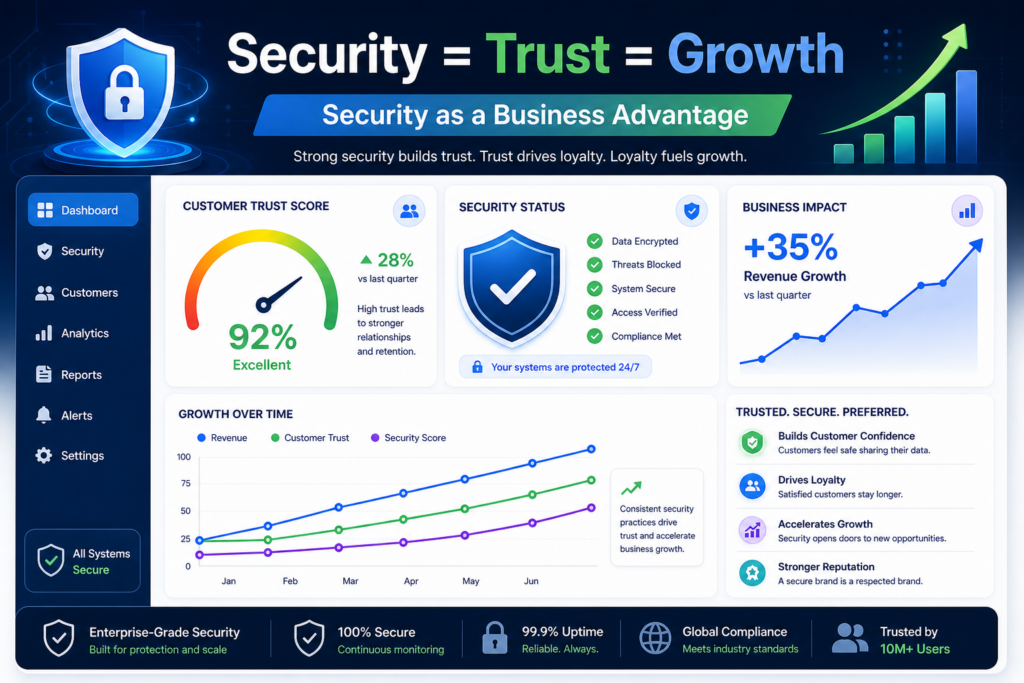
Traditionally, cybersecurity was seen as a cost center. Today, it’s a competitive differentiator.
Businesses that highlight their security practices gain:
- Customer confidence
- Market credibility
- Stronger brand positioning
Example of Strategic Advantage
When a company openly communicates its security measures, it:
- Differentiates itself from competitors
- Attracts privacy-conscious users
- Builds long-term trust
This aligns with the growing trend where customers actively choose platforms based on their security standards.
Challenges in Implementing Cybersecurity
Despite its importance, implementing cybersecurity effectively comes with challenges.
Common Barriers
- High implementation costs
- Lack of skilled professionals
- Rapidly evolving threat landscape
- Complexity of compliance requirements
However, ignoring cybersecurity is far more costly than investing in it.
Organizations can overcome these challenges by adopting scalable and automated solutions, as often discussed in advanced security frameworks and platforms available through resources like BotDef’s security solutions.
The Future of Cybersecurity and Trust
As technology evolves, so do cyber threats. Emerging trends include:
1. AI-Powered Cybersecurity
Artificial intelligence is transforming threat detection by:
- Identifying patterns
- Predicting attacks
- Automating responses
2. Zero Trust Architecture
This model assumes that no user or system is automatically trusted.
Key principles:
- Verify every request
- Limit access privileges
- Continuously monitor activity
3. Privacy-First Design
Future systems will prioritize privacy from the ground up.
This includes:
- Minimal data collection
- Transparent usage policies
- Built-in security features
Practical Steps for Businesses
To strengthen Cybersecurity’s Role in Building Customer Trust, businesses should:
- Invest in modern security infrastructure
- Communicate security practices clearly
- Regularly update systems and protocols
- Monitor and respond to threats proactively
- Educate both employees and customers
Even small improvements in security can significantly impact how customers perceive a brand.
Conclusion
Cybersecurity is no longer optional—it is fundamental to building and maintaining customer trust. As digital interactions continue to grow, customers expect businesses to prioritize their safety just as much as their services.
By understanding Cybersecurity’s Role in Building Customer Trust, organizations can move beyond reactive security measures and adopt a proactive, trust-driven approach.
Ultimately, businesses that invest in cybersecurity are not just protecting data—they are building credibility, strengthening relationships, and securing their future in an increasingly digital world. Platforms like BotDef continue to highlight how staying informed and secure empowers businesses to earn and retain customer trust in a competitive landscape.