In today’s startup ecosystem, speed often feels like the ultimate competitive advantage. Founders race to launch their Minimum Viable Product (MVP), validate ideas, attract investors, and onboard their first customers. However, in the rush to ship quickly, one critical aspect is frequently overlooked—security.
A successful MVP isn’t just about proving market demand. It’s also about earning trust. Users expect their personal information, payment details, and business data to remain protected from day one. A single security incident during the early stages can damage credibility, slow customer growth, and create legal complications that are difficult to recover from.
At BotDef, security is viewed as an essential business foundation rather than an afterthought. As highlighted throughout the resources available on the platform, modern cybersecurity is not only about preventing attacks but also about building resilient digital products that customers can confidently trust.
This founder’s guide explains how to integrate security into your MVP without sacrificing development speed. Whether you’re building a SaaS platform, marketplace, AI application, fintech solution, or mobile app, these practical strategies will help you create a secure foundation for future growth.
Why Security Should Be Part of Your MVP Strategy
Many founders mistakenly believe security becomes important only after reaching thousands of users. Unfortunately, attackers don’t wait until startups become large companies.
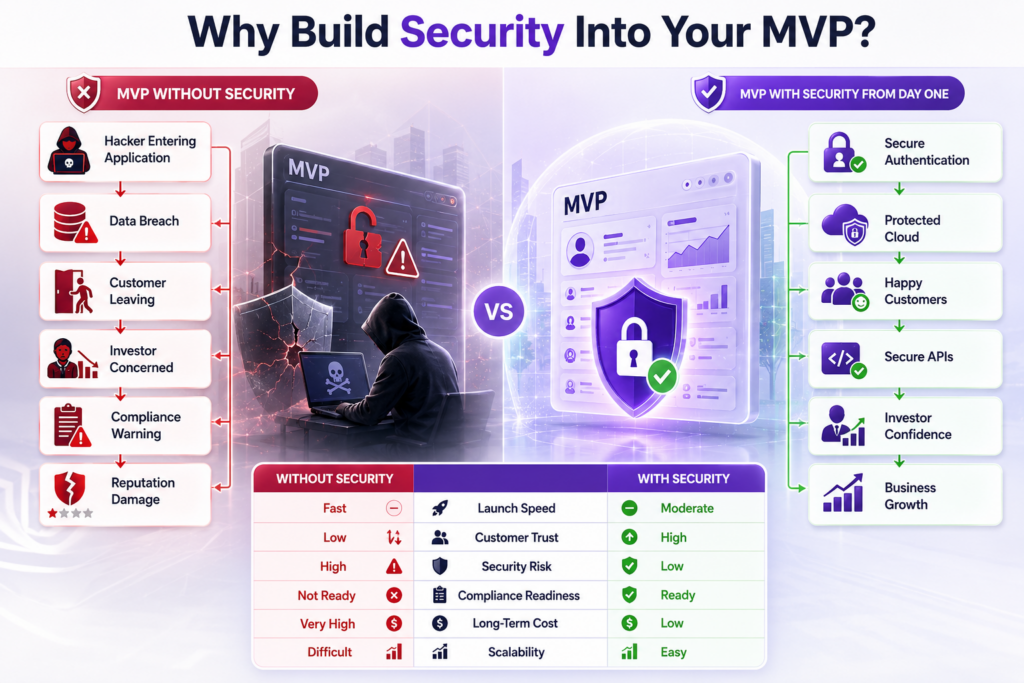
Early-stage startups often become attractive targets because they typically have:
- Limited security resources
- Small engineering teams
- Rapid deployment cycles
- Weak monitoring
- Incomplete security policies
When security is ignored during MVP development, technical debt grows rapidly. Fixing security flaws later usually costs significantly more than preventing them during development.
According to the OWASP Top 10, common vulnerabilities like broken authentication, insecure design, and access control issues continue to affect organizations of every size—including startups.
Building security into your MVP helps you:
- Build customer trust
- Reduce future development costs
- Protect investor confidence
- Simplify compliance efforts
- Prevent avoidable breaches
- Support long-term scalability
Security is not about making products harder to build—it is about making businesses sustainable.
Understanding the Real Risks Facing MVPs
Many startup founders believe hackers only target large enterprises. Reality tells a different story.
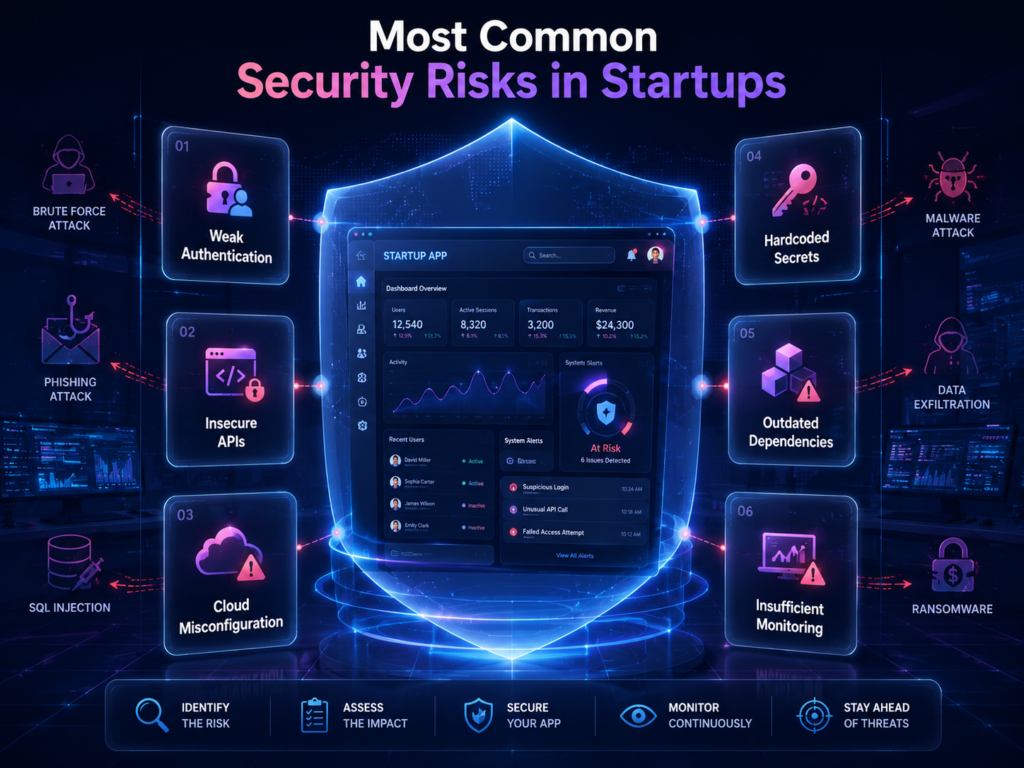
Attackers often automate scans across the internet looking for:
- Exposed databases
- Weak passwords
- Public cloud storage
- Misconfigured servers
- Unpatched software
- Insecure APIs
If your MVP becomes publicly accessible, it immediately enters the global attack surface.
Common startup security risks include:
Weak Authentication
Simple login systems without proper password protection or MFA can become easy entry points.
Insecure APIs
Modern applications rely heavily on APIs. Poor authentication, missing authorization checks, or exposed endpoints create significant vulnerabilities.
Hardcoded Secrets
API keys, database credentials, and cloud tokens accidentally committed into repositories remain one of the most common startup mistakes.
Cloud Misconfigurations
Incorrect permissions on storage buckets or cloud infrastructure may expose sensitive customer information.
Third-Party Dependencies
Open-source packages accelerate development, but outdated libraries often introduce known vulnerabilities.
Building Security Into Your MVP From Day One
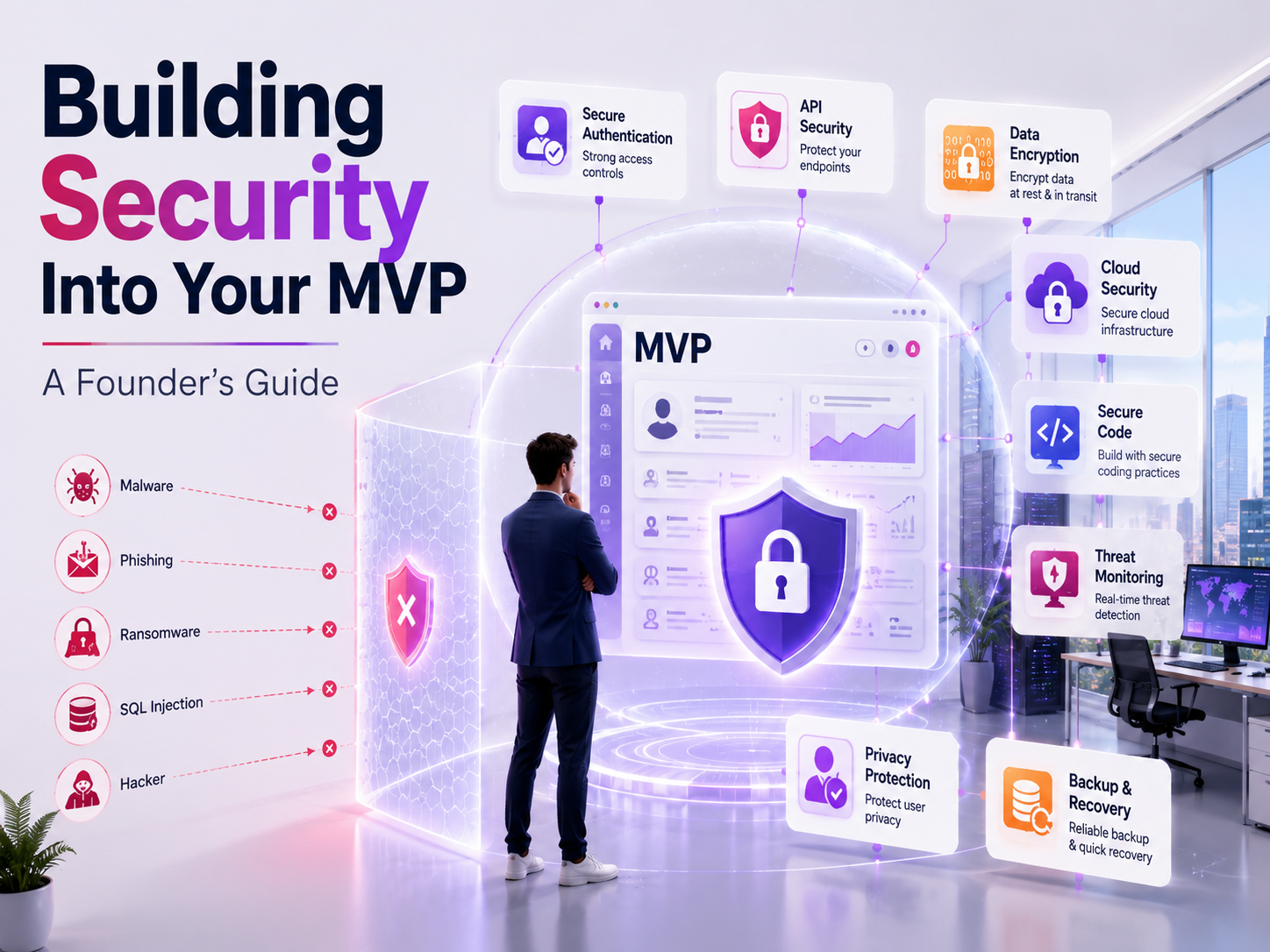
The Building Security Into Your MVP approach doesn’t require a massive cybersecurity budget. Instead, it focuses on smart development decisions.
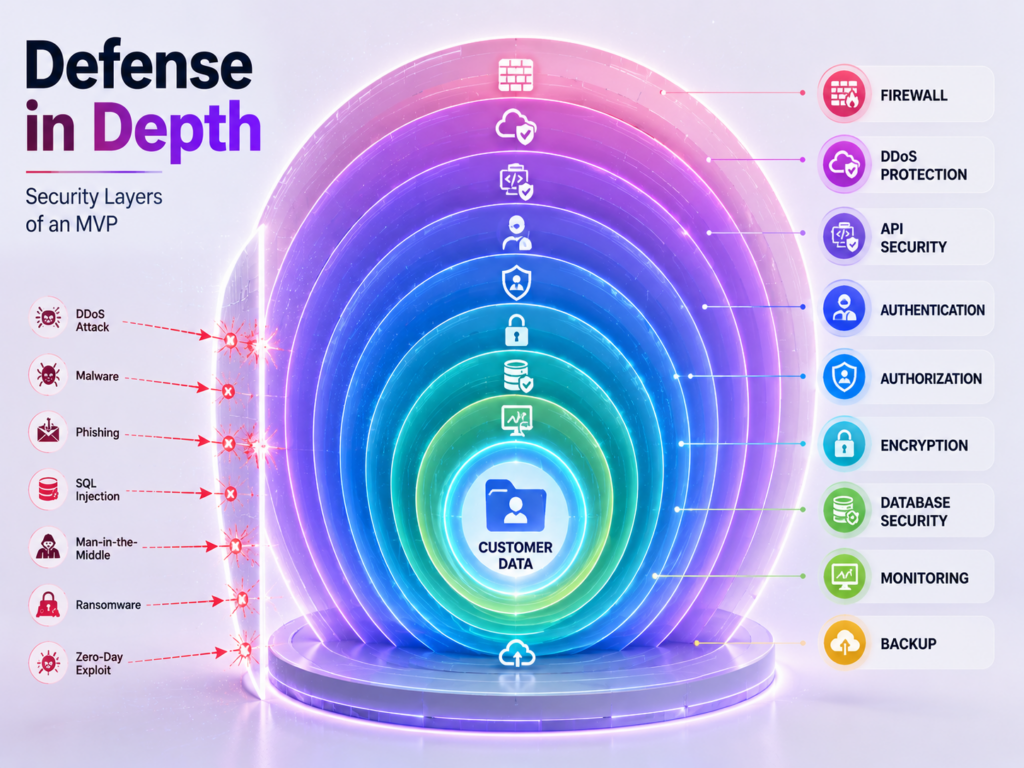
Design Secure Authentication
Authentication forms the first line of defense.
Best practices include:
- Hash passwords using strong algorithms
- Support multi-factor authentication whenever possible
- Use secure session management
- Apply account lockout policies
- Avoid storing passwords in plain text
Identity should never become the weakest component of your application.
Follow Secure Coding Practices
Secure code reduces vulnerabilities before deployment.
Development teams should:
- Validate all user inputs
- Sanitize database queries
- Escape output properly
- Prevent SQL Injection
- Protect against Cross-Site Scripting (XSS)
- Implement CSRF protection
Following secure coding standards dramatically reduces future security incidents.
The NIST Secure Software Development Framework (SSDF) offers excellent guidance for integrating security throughout the software development lifecycle.
Protect APIs Properly
Most modern MVPs communicate through APIs.
API security should include:
- OAuth or JWT authentication
- Rate limiting
- API gateway protection
- Request validation
- Input filtering
- Authorization checks
- Logging
Never assume API endpoints remain hidden.
If users can access them, attackers can too.
Encrypt Sensitive Data
Encryption should protect data:
At Rest
Databases
Cloud storage
Backups
In Transit
HTTPS
TLS encryption
Secure API communication
Encryption protects customer information even if attackers gain unauthorized access.
Secure Your Cloud Infrastructure
Cloud platforms simplify startup operations but also introduce configuration risks.
Founders should ensure:
- Least-privilege IAM permissions
- Private storage buckets
- Firewall rules
- Security groups
- Logging enabled
- Automatic backups
- Multi-region disaster recovery
Cloud security starts with proper configuration—not expensive security tools.
Integrate Security Into Your Development Workflow
Security should become part of everyday development rather than an occasional audit.
A secure workflow includes:
Code Reviews
Every pull request should include security considerations.
Automated Scanning
Use automated tools for:
- Dependency scanning
- Secret detection
- Static code analysis
Continuous Updates
Regularly update:
- Frameworks
- Libraries
- Containers
- Operating systems
Security patches often fix publicly known vulnerabilities.
Don’t Ignore Dependency Security
Nearly every startup uses open-source software.
While open-source accelerates development, dependencies require continuous monitoring.
Review package updates regularly.
Remove unused libraries.
Avoid unsupported packages.
Several security insights published through the BotDef Blog discuss emerging cybersecurity threats, software vulnerabilities, and practical defensive strategies that help organizations strengthen their applications as they grow.
Logging, Monitoring, and Incident Response
Prevention alone isn’t enough.
Founders also need visibility.
Essential monitoring includes:
- Failed login attempts
- API abuse
- Database access
- Infrastructure alerts
- Admin activity
- Suspicious traffic
Good logging helps investigate incidents quickly.
Prepare a simple incident response plan covering:
- Detection
- Containment
- Communication
- Recovery
- Lessons learned
Even startups benefit from documented response procedures.
Think About Privacy Early
Modern customers increasingly value privacy alongside security.
Collect only necessary information.
Store only required data.
Delete unused customer information.
Provide transparent privacy policies.
If your business serves international customers, familiarize yourself with regulations such as:
- GDPR
- CCPA
- Regional privacy requirements
Privacy-first design improves customer confidence.
Secure Third-Party Integrations
Most MVPs rely on external services.
Examples include:
- Payment gateways
- Authentication providers
- Email services
- Analytics
- AI APIs
- CRM platforms
Before integrating third-party services:
- Review their security documentation.
- Enable available security features.
- Rotate API keys regularly.
- Monitor integration logs.
- Limit permissions whenever possible.
A vulnerable integration can become your weakest security layer.
Common Security Mistakes Startup Founders Make
Even experienced founders sometimes repeat the same mistakes.
Avoid these common issues:
Prioritizing Features Over Security
Shipping faster should never mean shipping insecure software.
Skipping Security Testing
Basic penetration testing can identify critical flaws before launch.
Sharing Credentials
Every team member should have individual accounts.
Never share production credentials.
Ignoring Backups
Backups protect businesses from ransomware, accidental deletion, and infrastructure failures.
Delaying Security Documentation
Simple documentation improves consistency as teams grow.
Practical Security Checklist Before Launch
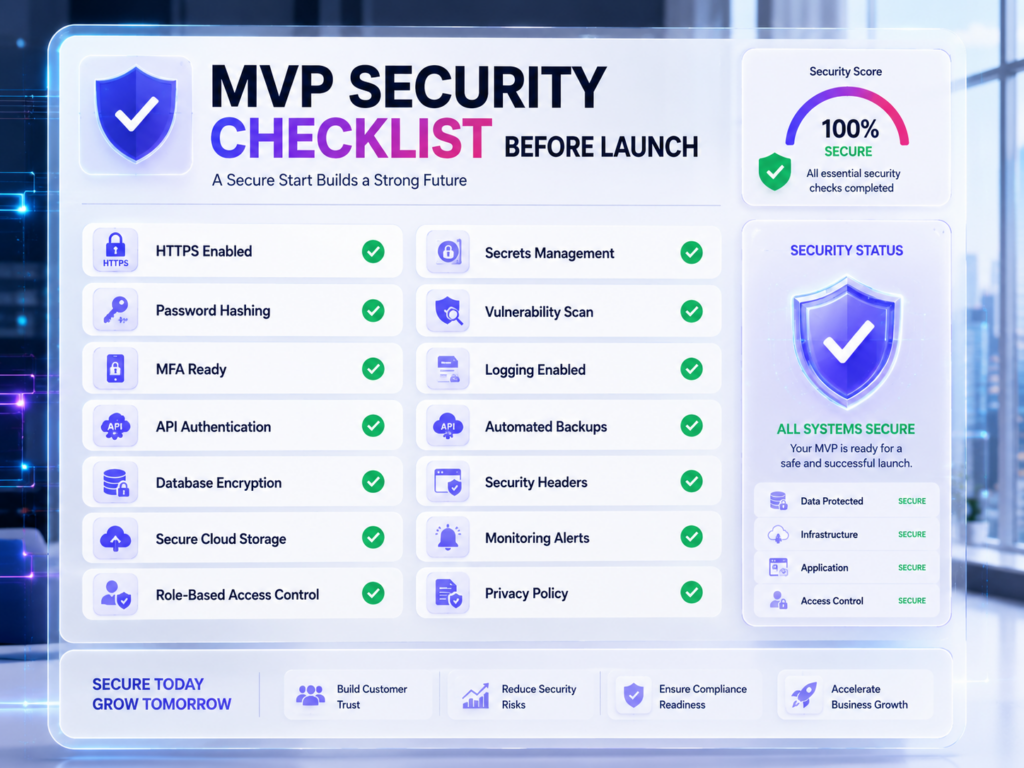
Before releasing your MVP, verify the following:
- HTTPS enabled everywhere
- Passwords securely hashed
- API authentication implemented
- Database encrypted
- Secrets stored securely
- Role-based access control configured
- Error messages sanitized
- Logging enabled
- Dependency scan completed
- Security headers configured
- Backup strategy tested
- Cloud permissions reviewed
- Privacy policy published
- Monitoring alerts configured
This checklist won’t guarantee perfect security—but it significantly reduces avoidable risks.
Security Is a Business Advantage
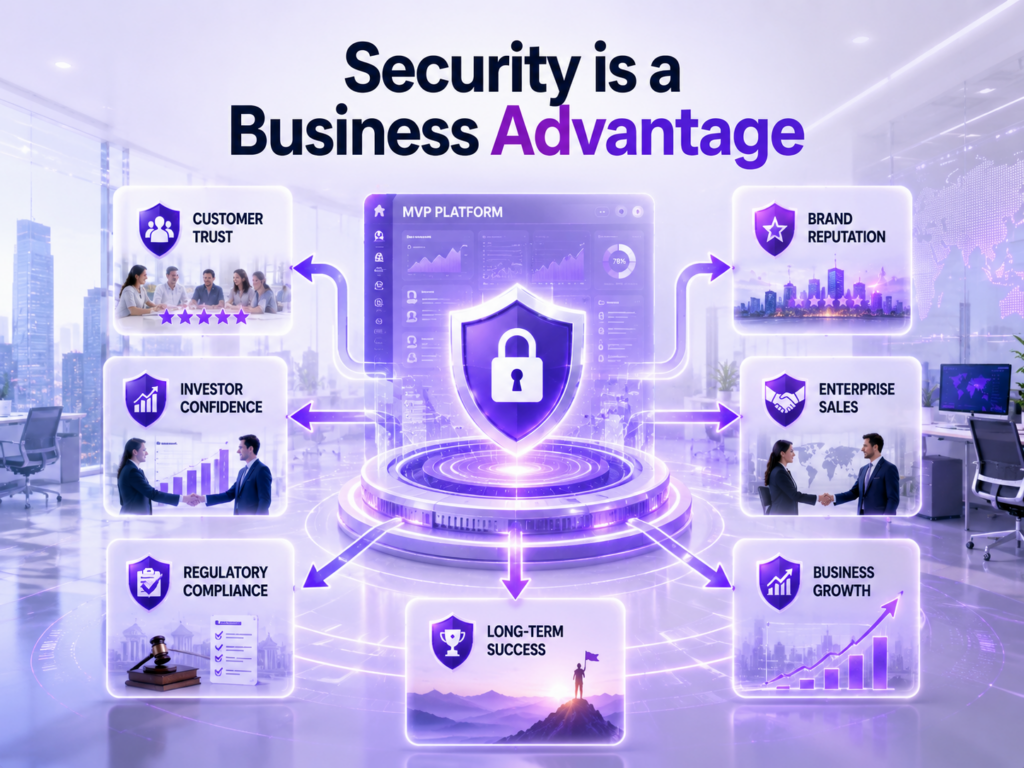
Security is often viewed as an engineering responsibility.
In reality, it directly influences:
- Customer acquisition
- Enterprise sales
- Investor confidence
- Regulatory readiness
- Brand reputation
Enterprise buyers increasingly evaluate vendors using security questionnaires before signing contracts.
Investors also recognize secure development practices as indicators of operational maturity.
Building security into your MVP creates competitive advantages that extend far beyond technology.
The Road Ahead: Security as a Continuous Journey
Cybersecurity isn’t a one-time milestone achieved before launch. Every new feature, integration, user, and infrastructure change introduces fresh risks that require continuous evaluation.
Successful startups adopt an ongoing security mindset by regularly reviewing their architecture, monitoring emerging threats, updating dependencies, and educating development teams. As your product scales, security should evolve alongside it rather than struggle to catch up.
Resources available through BotDef’s security knowledge hub can help founders, developers, and technology leaders stay informed about modern attack techniques, cybersecurity trends, and practical defensive strategies throughout every stage of product growth.
Ultimately, building security into your MVP is an investment in your company’s future. Customers trust products that protect their information, investors value businesses with mature security practices, and engineering teams benefit from stronger foundations that support long-term innovation.
The earlier you embrace Building Security Into Your MVP, the easier it becomes to build resilient products, maintain customer confidence, and grow your business with security woven into every stage of development rather than added as an afterthought.
Conclusion
Launching quickly remains important for startups, but launching securely is even more valuable. An MVP that protects customer data, secures APIs, encrypts sensitive information, and follows secure development practices establishes trust from the very beginning.
Rather than treating cybersecurity as a future concern, founders should make it a core element of product strategy. Small security decisions made today can prevent major incidents tomorrow.
By Building Security Into Your MVP, you are not only reducing technical risks—you are creating a stronger business, improving customer confidence, and laying the groundwork for sustainable growth in an increasingly connected digital world.