Introduction: Why Startup Tax Exemption Matters in 2026
India has become one of the fastest-growing startup ecosystems in the world. However, while innovation is rising, so are compliance requirements and taxation complexities. Therefore, understanding Startup Tax Exemption in India is not just beneficial — it is essential.
If you are a founder, co-founder, investor, or early-stage entrepreneur, this guide will explain:
- What Startup Tax Exemption is
- How DPIIT recognition works
- Section 80-IAC tax holiday benefits
- Angel tax exemption
- Capital gains benefits
- Application process step-by-step
- Common mistakes to avoid
Moreover, this blog is structured to help you rank better in Google Search Console by using proper headings, semantic keywords, and authoritative references.
What is Startup Tax Exemption in India?
Startup Tax Exemption in India refers to special tax benefits provided by the Government of India under the Startup India Initiative, launched in 2016.
These benefits primarily include:
- 3-year income tax exemption under Section 80-IAC
- Angel tax exemption under Section 56
- Capital gains tax exemption
- Carry forward of losses
👉 Official Government Portal:
https://www.startupindia.gov.in
These exemptions aim to promote innovation, job creation, and economic growth.
DPIIT Recognition: The First Step
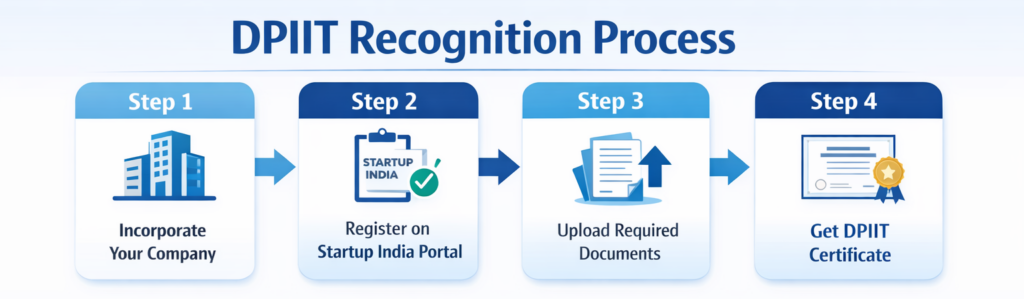
Before claiming any tax exemption, your startup must obtain DPIIT Recognition (Department for Promotion of Industry and Internal Trade).
Eligibility Criteria for DPIIT Recognition
Your startup must:
- Be incorporated as a Private Limited Company, LLP, or Registered Partnership Firm
- Be less than 10 years old
- Have turnover below ₹100 crore in any financial year
- Work towards innovation, development, or improvement of products/services
👉 Apply here:
https://www.startupindia.gov.in/content/sih/en/recognition-page.html
Without DPIIT recognition, you cannot claim Startup Tax Exemption in India.
Section 80-IAC: 3-Year Tax Holiday Explained
One of the biggest benefits under Startup Tax Exemption in India is Section 80-IAC of the Income Tax Act, 1961.
What Does It Offer?
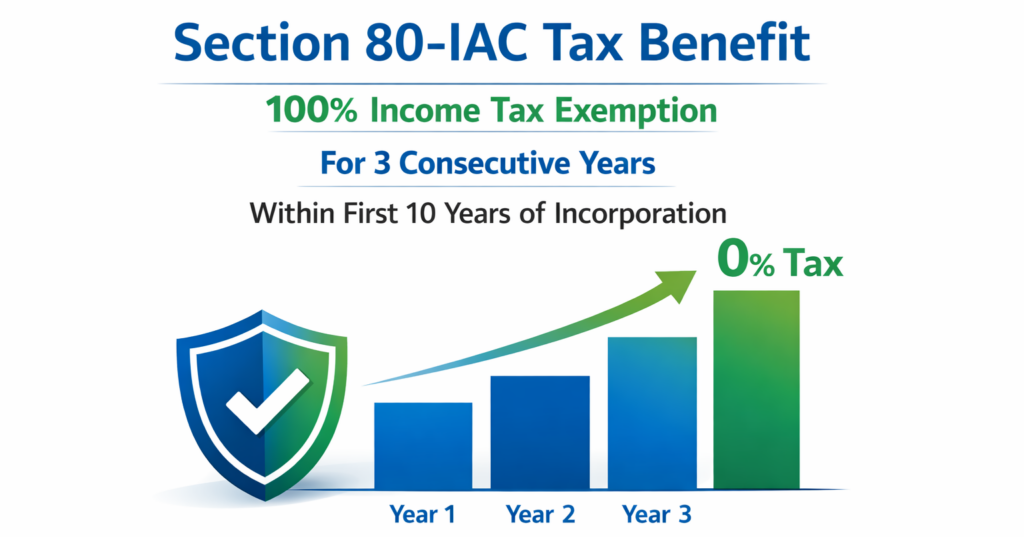
Eligible startups can claim:
✔ 100% income tax exemption
✔ For any 3 consecutive years
✔ Out of the first 10 years from incorporation
Example:
If your startup makes ₹50 lakh profit annually, you can save approximately ₹15–18 lakh per year in tax.
👉 Income Tax Reference:
https://incometaxindia.gov.in
However, approval from the Inter-Ministerial Board (IMB) is required.
Angel Tax Exemption (Section 56)
Earlier, startups faced issues under “Angel Tax”. Fortunately, recognized startups can claim exemption under Section 56(2)(viib).
Why It Matters?
When investors invest at a valuation higher than fair market value, excess amount was taxed earlier.
Now:
- DPIIT-recognized startups are exempt
- No tax on premium received from investors
- Boosts startup fundraising capacity
This is a major component of Startup Tax Exemption in India.
Capital Gains Tax Exemption
Another powerful benefit includes capital gains exemptions.
Section 54EE & 54GB Benefits
Investors can claim exemption if:
- Capital gains are invested in eligible startups
- Investment is held for prescribed lock-in period
Therefore, startups become more attractive to investors.
Carry Forward of Losses
Normally, companies cannot carry forward losses if shareholding changes beyond 51%.
However, eligible startups can carry forward losses even after ownership change — provided:
- Original shareholders continue holding shares
This provides financial flexibility during early funding rounds.
Step-by-Step Application Process
Step 1: Register Business
Incorporate as Private Limited, LLP, or Partnership.
Step 2: Obtain DPIIT Recognition
Apply online via Startup India Portal.
Step 3: Apply for 80-IAC Approval
Submit financials & innovation details.
Step 4: Angel Tax Declaration
Submit required documents to Income Tax Department.
Common Mistakes Startups Make
- Applying without DPIIT recognition
- Not maintaining innovation documentation
- Incorrect valuation reports
- Missing IMB approval
- Poor compliance tracking
Therefore, always consult a CA or startup compliance expert.
How Startup Tax Exemption Helps in Scaling
Because taxation directly impacts cash flow, exemption benefits:
- Increase reinvestment capacity
- Improve investor confidence
- Enhance valuation
- Reduce burn rate
Consequently, startups survive longer in competitive markets.
Final Conclusion
Startup Tax Exemption in India is not merely a tax benefit. Instead, it is a strategic financial advantage designed to empower innovation and entrepreneurship.
Therefore, if you are building a startup in India, obtaining DPIIT recognition and claiming Section 80-IAC exemption should be a priority.
With proper documentation, compliance, and strategic planning, you can significantly reduce tax burden and accelerate growth.