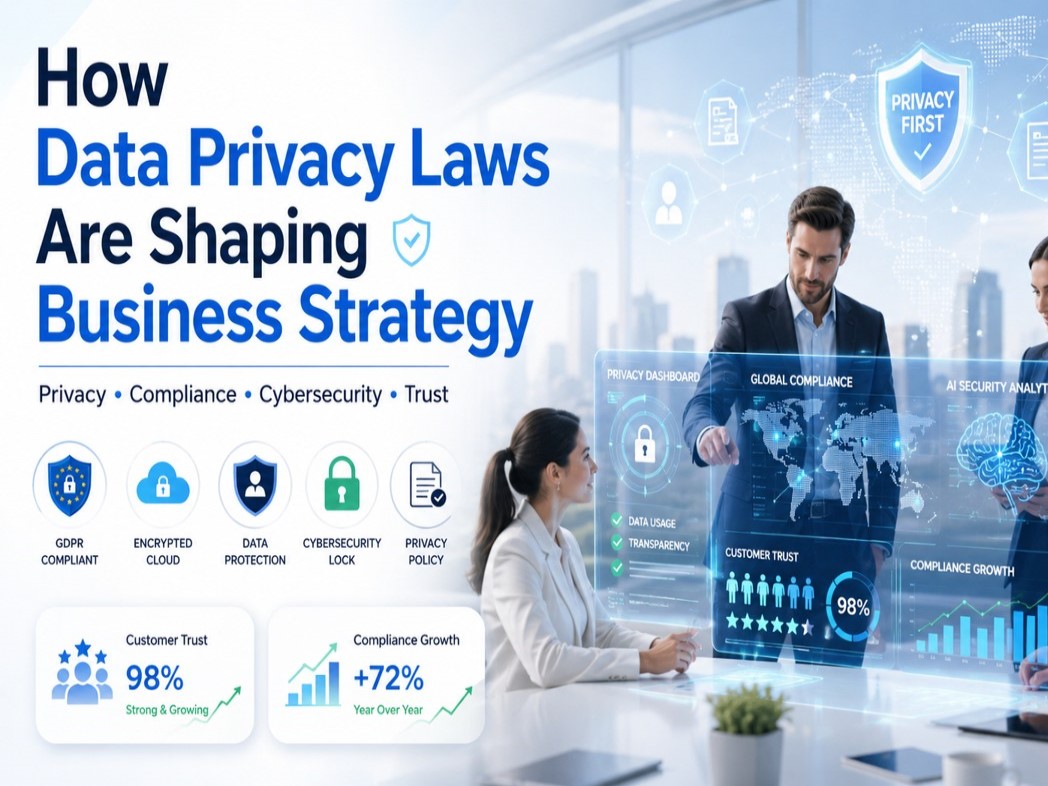
How Data Privacy Laws Are Shaping Business Strategy is becoming one of the most important discussions in today’s digital economy. As organizations collect more customer information to improve services, personalize experiences, and drive innovation, governments worldwide are introducing stricter privacy regulations to protect user data and digital rights. However, with increasing cyber threats and growing public concern about digital privacy, governments worldwide have introduced strict regulations to protect user data.
As a result, businesses are no longer treating compliance as just a legal checkbox. Instead, data privacy has become a core part of modern business strategy. From product development and marketing to cybersecurity and customer trust, privacy regulations now influence nearly every aspect of operations.
At the same time, companies are investing heavily in digital security frameworks and compliance-driven infrastructure. Platforms like BotDef continue to highlight how modern businesses must combine cybersecurity awareness with proactive privacy management to remain competitive in today’s evolving digital landscape.
This shift is transforming how organizations operate, innovate, and build customer relationships. In this blog, we will explore how data privacy laws are shaping business strategy, the challenges companies face, and the opportunities these regulations create for long-term growth.
The Growing Importance of Data Privacy in Business
Data privacy is no longer limited to IT departments or legal teams. It has become a boardroom-level priority.
Consumers today are more aware of how companies collect, store, and use their personal information. Consequently, organizations that fail to protect customer data risk financial penalties, reputational damage, and customer loss.
Several high-profile data breaches over the last decade have accelerated global demand for stronger regulations. Governments responded by introducing laws such as:
- General Data Protection Regulation (GDPR)
- California Consumer Privacy Act (CCPA)
- Digital Personal Data Protection Act (India)
- Brazil’s LGPD
- Personal Information Protection Law (China)
These regulations require businesses to handle data responsibly, maintain transparency, and strengthen cybersecurity practices.
According to the European Commission’s GDPR guidelines, organizations must implement privacy-first policies that prioritize user consent, accountability, and secure data processing.
As a result, data privacy is now directly connected to business reputation and customer confidence.
How Data Privacy Laws Are Shaping Business Strategy
Modern privacy regulations are forcing organizations to rethink their operational models. Instead of collecting unlimited customer data, businesses must now focus on responsible data governance.
Privacy-First Business Models
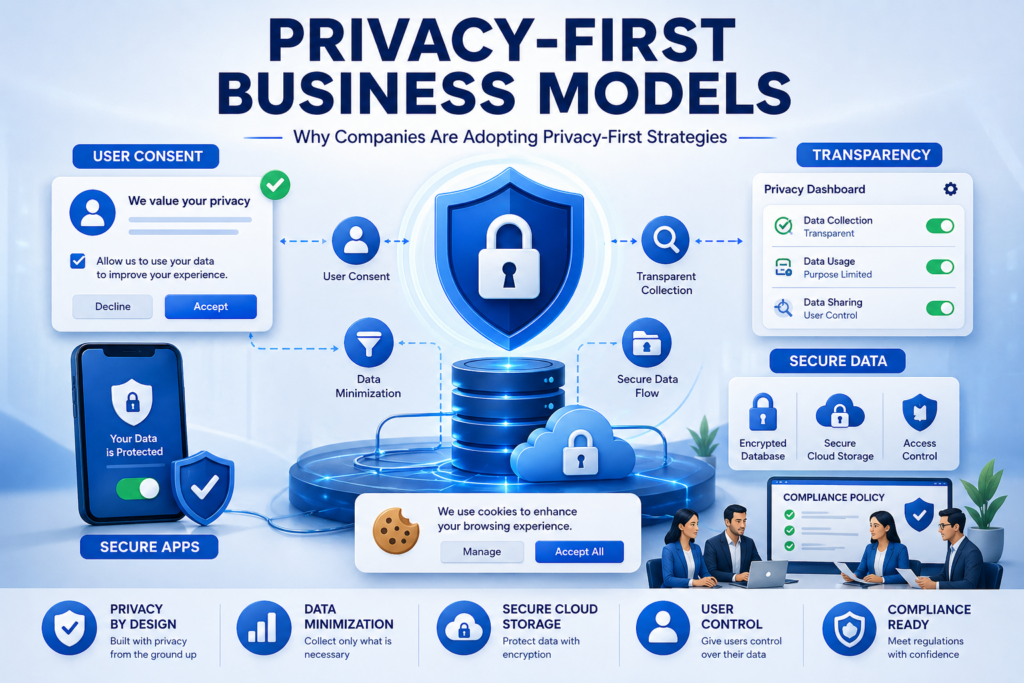
One of the biggest strategic changes is the rise of privacy-first business models.
Previously, companies often gathered excessive customer information without clearly explaining why it was needed. However, laws like GDPR introduced strict consent requirements and data minimization principles.
Businesses now ask critical questions such as:
- What data is truly necessary?
- How long should it be stored?
- Who can access it?
- How can it be protected?
Consequently, organizations are redesigning products and digital platforms around privacy principles.
For example:
- Mobile apps now request permission before accessing location or camera data.
- Websites provide cookie consent management tools.
- SaaS platforms offer customizable privacy settings.
- Businesses publish transparent privacy policies.
This shift helps companies improve user trust while reducing regulatory risks.
Building Customer Trust Through Data Transparency
Customer trust has become one of the most valuable competitive advantages in the digital world.
Today’s consumers prefer businesses that clearly explain how their information is collected and protected. Therefore, transparency is becoming a major business differentiator.
Organizations that openly communicate their privacy practices often experience:
- Better customer loyalty
- Higher user engagement
- Improved brand credibility
- Increased conversion rates
Moreover, businesses are integrating privacy communication directly into customer experience strategies.
For instance:
- Companies provide simplified privacy dashboards.
- Users can easily delete or download personal data.
- Businesses notify customers about policy updates.
- Brands explain how AI systems use customer information.
These practices help organizations establish stronger long-term relationships with users.
Additionally, businesses focusing on cybersecurity education and digital trust often gain a stronger market position. Resources shared through platforms such as BotDef’s security insights blog demonstrate how transparency and awareness play a crucial role in modern business growth strategies.
Data Privacy Laws and Digital Marketing Strategy
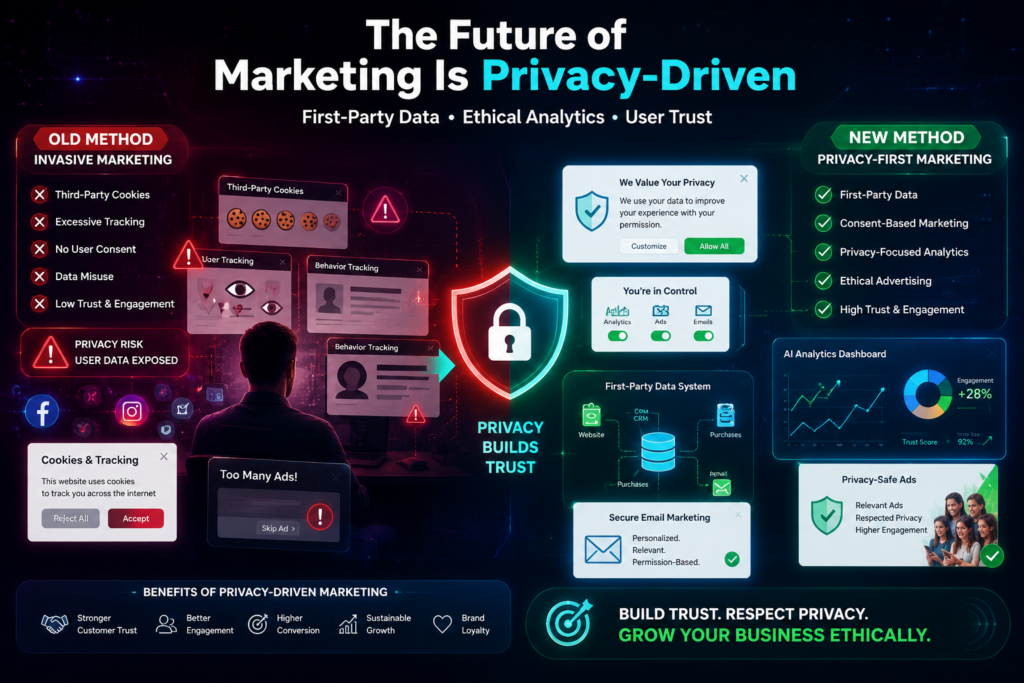
Digital marketing has undergone significant changes because of evolving privacy regulations.
Previously, marketers relied heavily on third-party cookies and behavioral tracking to target users. However, stricter privacy laws now limit unrestricted data collection.
As a result, businesses are adapting their marketing strategies in several ways.
The Shift Toward First-Party Data
First-party data refers to information collected directly from customers through:
- Website interactions
- Purchases
- Surveys
- Email subscriptions
- Customer accounts
Since customers voluntarily provide this information, it is considered more trustworthy and compliant.
Consequently, companies are investing in:
- Email marketing
- Customer communities
- Loyalty programs
- Personalized user experiences
- Consent-based engagement models
This transition improves both compliance and customer relationships.
Reduced Dependence on Third-Party Tracking
Privacy-focused browser updates and regulations have reduced the effectiveness of third-party tracking technologies.
Therefore, businesses are now exploring:
- Contextual advertising
- AI-driven analytics
- Privacy-preserving advertising
- Server-side tracking
- Consent management platforms
According to Google’s Privacy Sandbox initiative, the future of online advertising will focus more on privacy-friendly technologies that balance personalization with user protection.
This change is forcing marketing teams to prioritize ethical data practices over aggressive data collection.
Cybersecurity and Compliance Are Now Strategic Investments
Businesses previously viewed cybersecurity as an operational necessity. Today, it is a strategic business investment directly tied to compliance and growth.
Data privacy laws require organizations to:
- Protect sensitive information
- Prevent unauthorized access
- Detect security threats
- Report breaches quickly
- Maintain security documentation
Consequently, companies are increasing investments in:
- Cloud security
- Endpoint protection
- Encryption technologies
- Identity and access management
- Security monitoring systems
Organizations are also implementing frameworks such as:
- Zero Trust Architecture
- Data Loss Prevention (DLP)
- Multi-factor authentication
- Secure DevOps practices
Moreover, businesses are integrating privacy and security into software development lifecycles from the beginning rather than treating them as afterthoughts.
This approach is often called “Privacy by Design.”
The Financial Impact of Privacy Regulations
Compliance requires investment, but ignoring regulations can be far more expensive.
Privacy violations may result in:
- Regulatory penalties
- Lawsuits
- Loss of customers
- Operational disruption
- Reputational damage
For example, GDPR allows authorities to impose fines of up to 4% of annual global turnover for severe violations.
Therefore, many businesses now include privacy risk management in financial planning and enterprise strategy.
Cost vs. Long-Term Value
Although implementing compliance frameworks requires resources, the long-term benefits are substantial.
Benefits include:
- Stronger customer trust
- Reduced breach risks
- Better operational governance
- Improved investor confidence
- Easier international expansion
In many industries, strong privacy standards have become a competitive advantage rather than a burden.
Data Privacy and International Business Expansion
Global businesses face additional challenges because privacy regulations vary across countries.
For instance:
- Europe prioritizes strict user consent.
- The United States uses sector-specific privacy rules.
- India focuses on digital data governance.
- China enforces strict data localization policies.
Therefore, multinational companies must develop flexible compliance strategies.
Cross-Border Data Transfer Challenges
Transferring customer data across borders has become more complex due to legal restrictions.
Businesses must ensure:
- Secure transfer mechanisms
- Regulatory approvals
- Vendor compliance
- Data localization requirements
Consequently, organizations are redesigning infrastructure to support regional data storage and localized compliance operations.
This shift is influencing:
- Cloud architecture decisions
- Vendor selection
- SaaS partnerships
- International market strategies
Companies that proactively adapt to global privacy standards often scale more effectively across international markets.
Privacy by Design Is Reshaping Product Development
Privacy considerations are now influencing how products and digital services are built.
Instead of adding compliance later, organizations integrate privacy directly into product architecture from the beginning.
Key Principles of Privacy by Design
Privacy-focused development often includes:
- Data minimization
- Encryption by default
- Secure authentication
- User-controlled privacy settings
- Transparent consent flows
This strategy reduces compliance risks while improving user confidence.
Additionally, development teams are collaborating more closely with legal and cybersecurity departments.
As a result:
- Product launches become more compliant.
- Security vulnerabilities decrease.
- User trust increases.
- Regulatory audits become easier.
Businesses that embrace privacy-centric innovation often achieve stronger long-term sustainability.
AI, Big Data, and Emerging Privacy Challenges
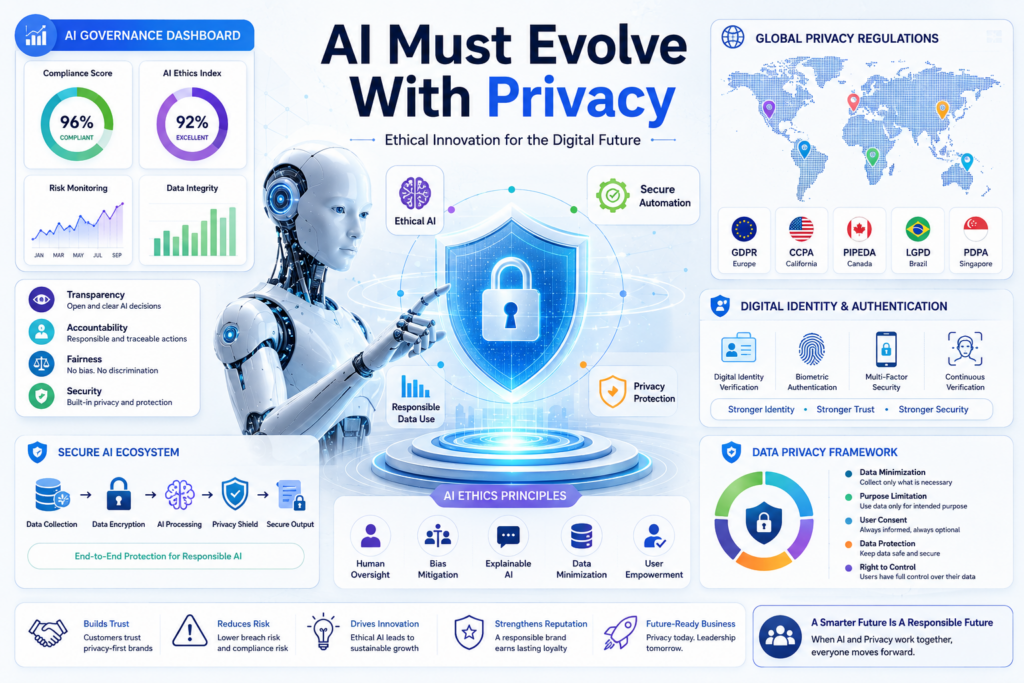
Artificial intelligence and big data analytics are creating new privacy concerns.
AI systems often require large datasets to function effectively. However, privacy laws restrict how businesses collect and process sensitive information.
This creates several challenges:
- Bias in AI training data
- Lack of transparency
- Consent management complexities
- Automated decision-making risks
Consequently, regulators are introducing stricter AI governance frameworks.
Organizations are now focusing on:
- Ethical AI development
- Explainable AI models
- Secure data anonymization
- Responsible machine learning practices
Businesses that balance innovation with privacy protection are more likely to maintain public trust and regulatory approval.
The Role of Leadership in Data Privacy Strategy
Data privacy is no longer solely the responsibility of IT teams.
Executive leadership now plays a critical role in privacy governance.
Modern organizations often involve:
- CEOs
- Chief Information Security Officers (CISOs)
- Legal departments
- Compliance officers
- Product leaders
Strong leadership helps companies:
- Create accountability
- Develop privacy-focused cultures
- Improve employee awareness
- Strengthen incident response planning
Additionally, organizations are increasingly providing cybersecurity training and privacy awareness programs across departments.
This company-wide approach improves overall compliance maturity.
Practical Steps Businesses Should Take
Organizations looking to strengthen privacy compliance and business resilience should consider the following actions.
Conduct Regular Data Audits
Businesses should identify:
- What data they collect
- Why they collect it
- Where it is stored
- Who can access it
Regular audits help reduce unnecessary exposure.
Strengthen Cybersecurity Infrastructure
Companies should invest in:
- Endpoint security
- Encryption
- Access control
- Security monitoring
- Threat detection systems
Improve Privacy Transparency
Organizations should:
- Simplify privacy policies
- Offer user control tools
- Explain consent practices clearly
Train Employees Regularly
Human error remains a major cybersecurity risk.
Therefore, businesses should conduct:
- Security awareness training
- Phishing simulations
- Compliance workshops
Monitor Regulatory Updates
Privacy laws continue evolving globally.
Businesses must stay updated to avoid compliance gaps and operational risks.
At the same time, following cybersecurity awareness platforms and privacy-focused resources such as BotDef’s cybersecurity solutions can help organizations stay informed about emerging threats, compliance trends, and digital protection strategies.
The Future of Data Privacy and Business Strategy
The importance of data privacy will continue growing in the coming years.
Several emerging trends are expected to shape the future:
- AI regulation expansion
- Stricter global privacy laws
- Increased consumer awareness
- Greater demand for digital transparency
- Privacy-enhancing technologies
- Decentralized identity systems
Businesses that proactively adapt to these changes will gain a stronger competitive advantage.
Moreover, privacy-conscious organizations are more likely to build sustainable customer relationships in an increasingly security-focused market.
Companies that ignore privacy expectations may struggle with:
- Regulatory scrutiny
- Customer distrust
- Brand damage
- Competitive disadvantages
Therefore, integrating privacy into business strategy is no longer optional—it is essential for long-term success.
Conclusion
The relationship between data privacy laws and business strategy has fundamentally changed. Organizations can no longer treat compliance as a secondary concern or isolated legal responsibility.
Today, privacy influences:
- Customer trust
- Marketing strategies
- Product development
- Cybersecurity investments
- International operations
- Long-term business growth
Businesses that prioritize transparency, security, and ethical data practices position themselves for stronger resilience and competitive success.
As digital ecosystems continue evolving, organizations must adopt privacy-first strategies that align with both regulatory requirements and customer expectations.
In today’s digital world, staying secure isn’t just an option—it’s a necessity. This blog is your go-to source for the latest security updates and insights. Businesses that continuously improve their cybersecurity posture and privacy frameworks will not only remain compliant but also build lasting trust in an increasingly connected world.