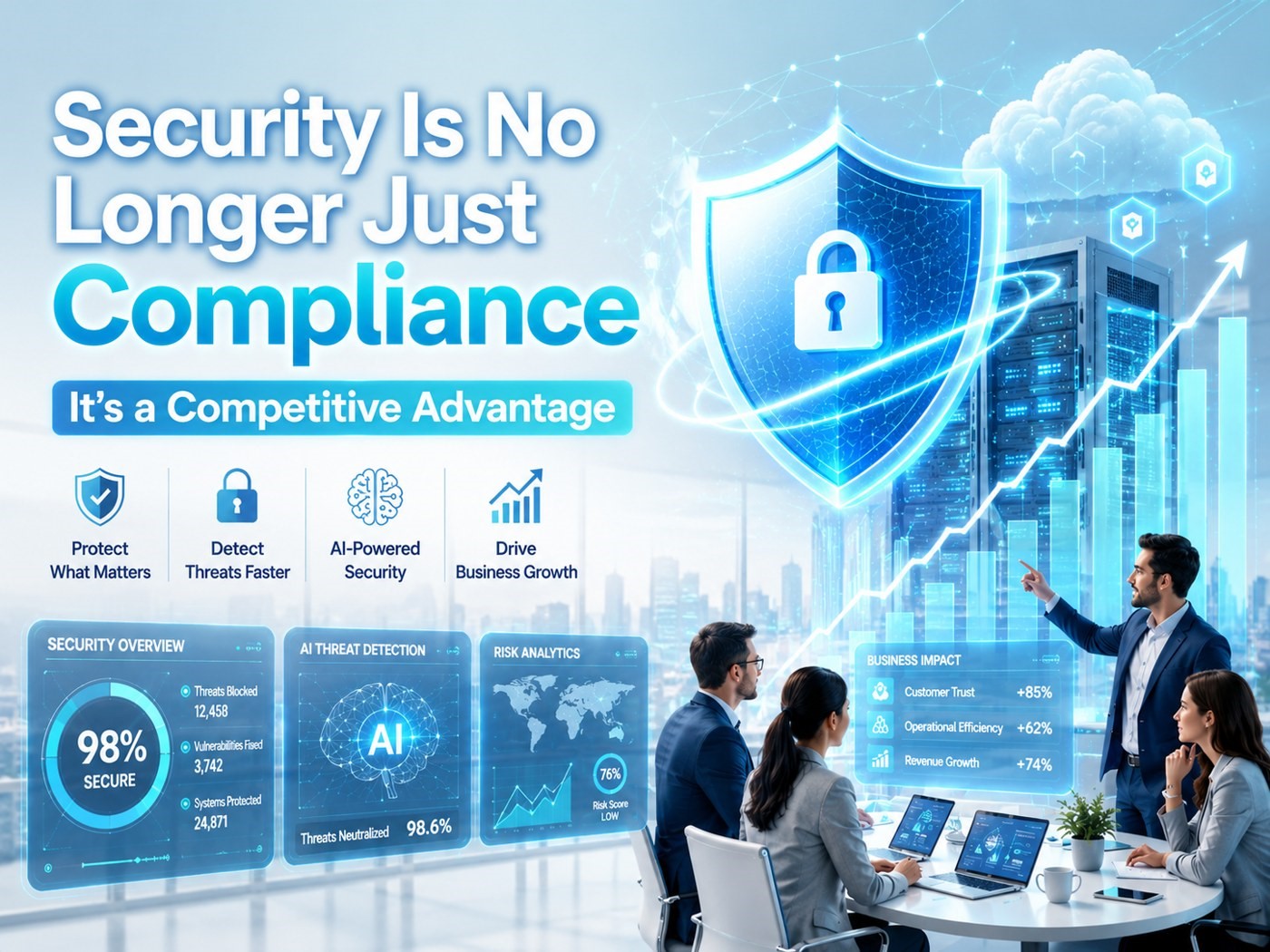
In today’s digital-first economy, cybersecurity is no longer just a technical requirement hidden behind IT departments. Instead, it has become a major factor influencing customer trust, business reputation, investor confidence, and long-term growth. Organizations that once treated security as a compliance checklist are now realizing that strong cybersecurity can become a true market differentiator.
As businesses continue to embrace cloud computing, remote work, SaaS platforms, and AI-powered systems, customers are becoming increasingly aware of how their data is stored, managed, and protected. Consequently, companies that invest in proactive security strategies are gaining a competitive edge over those that rely only on minimum compliance standards.
Modern security practices are not only about preventing attacks. They are also about demonstrating reliability, transparency, and operational maturity. Platforms such as BotDef are helping organizations strengthen their security posture while building customer confidence in an increasingly threat-driven digital environment.
This shift marks an important transformation in the business world: security is no longer simply a cost center — it is becoming a selling point.
Why Security Has Become a Business Priority
Over the last decade, cyber threats have evolved dramatically. Attackers now target organizations of all sizes, from startups to global enterprises. According to the IBM Cost of a Data Breach Report, the average cost of a data breach continues to rise every year, impacting revenue, operations, and customer trust.
At the same time, consumers are becoming more privacy-conscious. Before purchasing software, subscribing to services, or sharing sensitive information, users increasingly evaluate whether a company takes cybersecurity seriously.
As a result, security has moved beyond IT departments and entered boardroom discussions.
Businesses Are Facing New Customer Expectations
Today’s customers expect businesses to:
- Protect sensitive customer information
- Prevent unauthorized access
- Ensure secure payment systems
- Maintain platform availability
- Handle data transparently
- Respond quickly to incidents
Companies that fail to meet these expectations often suffer reputational damage that can take years to recover from.
Moreover, enterprise buyers now include security questionnaires and risk assessments during vendor evaluations. Therefore, organizations with strong cybersecurity practices can close deals faster and establish stronger partnerships.
From Compliance to Competitive Advantage
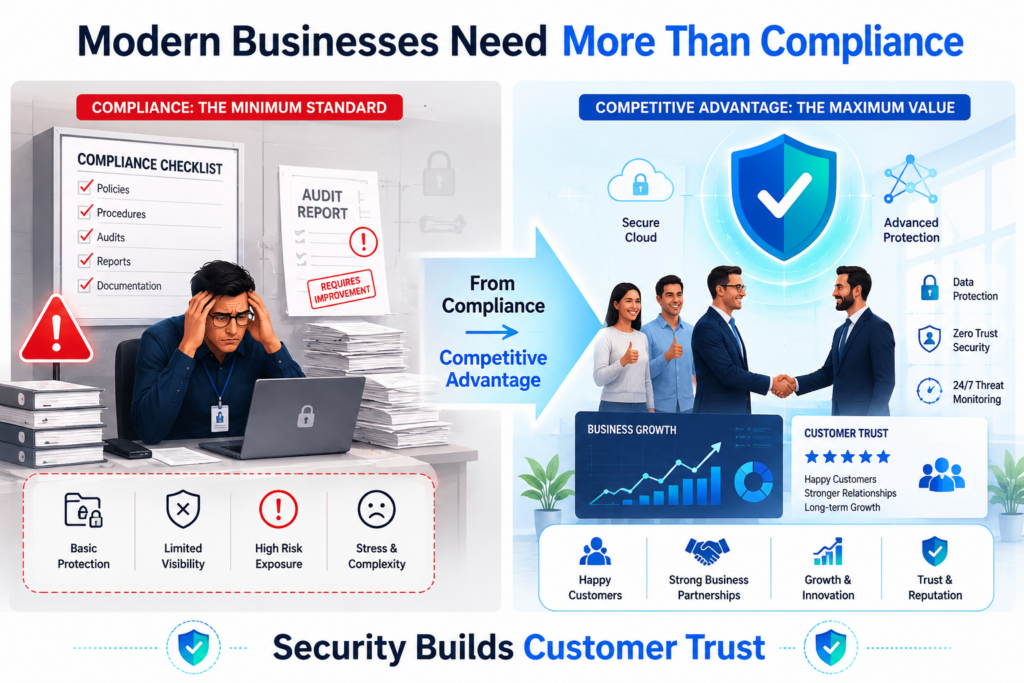
For many years, organizations focused primarily on regulatory compliance. Businesses implemented security measures mainly to satisfy frameworks such as:
- GDPR
- ISO 27001
- SOC 2
- HIPAA
- PCI-DSS
While compliance remains essential, modern organizations are discovering that security can provide far greater value than regulatory protection alone.
Compliance Is the Minimum Standard
Compliance frameworks establish baseline security requirements. However, simply meeting minimum standards does not guarantee strong protection against modern cyber threats.
Attackers do not care whether an organization passed an audit six months ago.
Businesses that rely solely on compliance-driven security often struggle with:
- Slow incident response
- Outdated infrastructure
- Poor employee awareness
- Limited visibility into threats
- Weak security culture
Therefore, organizations must shift from “checkbox security” toward continuous security improvement.
Security as a Market Differentiator
Companies that proactively invest in cybersecurity can position themselves as trustworthy and reliable partners.
This creates several competitive advantages:
1. Increased Customer Trust
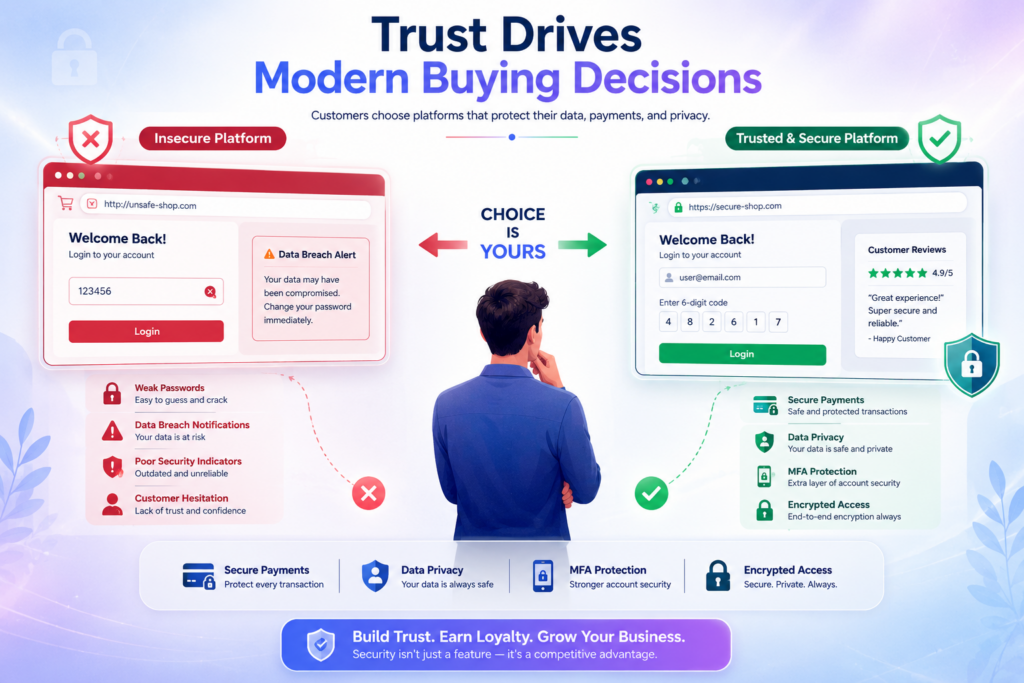
Customers prefer brands that prioritize security and privacy.
When organizations clearly communicate their security measures, users feel more confident sharing personal or financial information.
2. Faster Enterprise Sales
Security maturity accelerates B2B sales cycles.
Enterprise clients often require vendors to demonstrate:
- Secure development practices
- Data encryption
- Vulnerability management
- Access control systems
- Incident response planning
Organizations with mature security frameworks can complete procurement processes more efficiently.
3. Stronger Brand Reputation
A strong security posture enhances public perception.
Meanwhile, data breaches often create long-term reputational damage that affects customer retention and revenue growth.
4. Better Operational Resilience
Cybersecurity investments improve business continuity.
Secure systems reduce downtime, protect operational workflows, and minimize disruption during cyber incidents.
How Cybersecurity Influences Buying Decisions
Customers today are more informed than ever before. Many users actively research a company’s security practices before making purchasing decisions.
This trend is especially visible in industries such as:
- SaaS
- FinTech
- Healthcare
- E-commerce
- Cloud computing
- EdTech
- Enterprise software
Security Is Becoming Part of Product Marketing
Businesses now promote security features alongside product capabilities.
Examples include:
- End-to-end encryption
- Zero-trust architecture
- Multi-factor authentication
- Secure APIs
- Compliance certifications
- AI-driven threat detection
These features help reassure potential customers that the product is reliable and secure.
Additionally, organizations that publish transparent security policies often gain greater customer confidence. Businesses looking to strengthen their cybersecurity communication strategies can benefit from security-focused resources and updates available through the BotDef security blog.
The Rise of Security-Conscious Consumers
Consumers are becoming increasingly selective about the platforms they trust.
Recent high-profile breaches have educated users about cybersecurity risks, including:
- Identity theft
- Financial fraud
- Data leaks
- Ransomware attacks
- Credential theft
Consequently, users now expect businesses to implement modern protection measures.
Customers Notice Security Signals
Even non-technical users pay attention to security indicators such as:
- HTTPS encryption
- Secure checkout badges
- Privacy policies
- Multi-factor authentication
- Login notifications
- Account protection features
When businesses communicate these protections effectively, they create stronger user confidence.
On the other hand, poor security experiences quickly drive users toward competitors.
Building Security Into Business Strategy
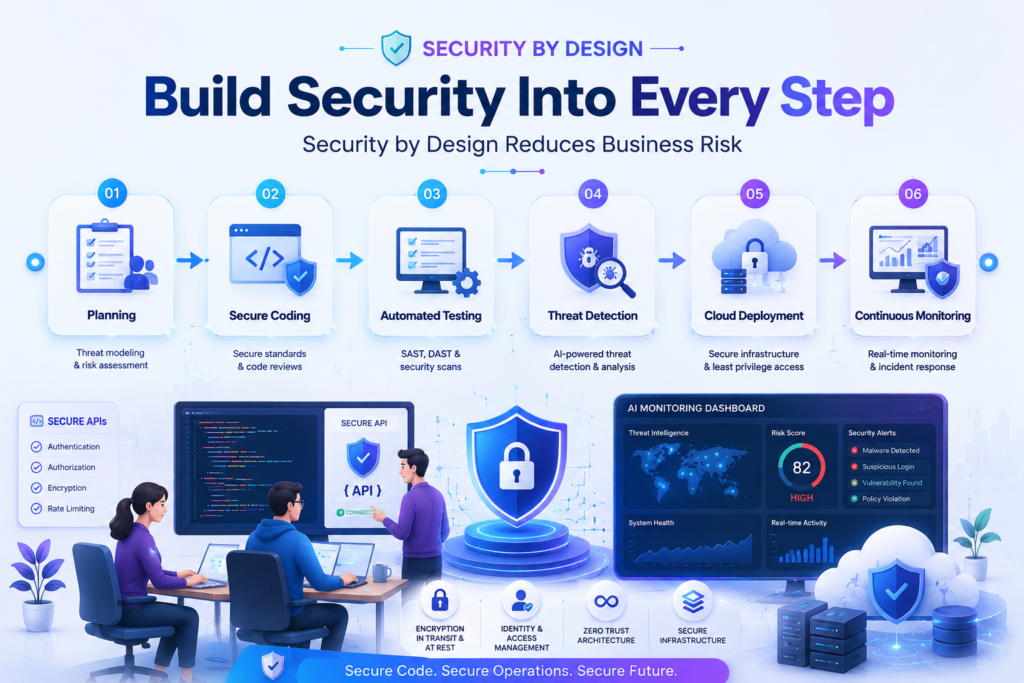
Organizations that successfully transform security into a competitive advantage treat cybersecurity as part of their core business strategy.
They do not isolate security within technical departments.
Instead, they integrate security into:
- Product development
- Customer experience
- Marketing
- Vendor management
- Employee training
- Executive decision-making
Security by Design
One of the most effective approaches is implementing “security by design.”
This means integrating security considerations throughout the development lifecycle rather than adding them later.
Security by design includes:
- Secure coding practices
- Automated vulnerability testing
- Access control policies
- Continuous monitoring
- Threat modeling
- API security reviews
According to the Cybersecurity & Infrastructure Security Agency (CISA), secure-by-design principles are becoming increasingly important for reducing systemic cyber risks.
The Role of Transparency in Cybersecurity
Transparency plays a critical role in building trust.
Customers appreciate organizations that communicate openly about:
- Security policies
- Data handling practices
- Compliance standards
- Incident response procedures
- Privacy commitments
Transparency demonstrates accountability and maturity.
Why Transparency Matters
When organizations hide security information, customers may assume the worst.
However, companies that openly discuss their cybersecurity efforts often build stronger relationships with users and partners.
Transparency can include:
- Public trust centers
- Security documentation
- Compliance reports
- Status pages
- Responsible disclosure programs
These initiatives reassure customers that security is taken seriously across the organization.
Security Culture: The Hidden Competitive Advantage
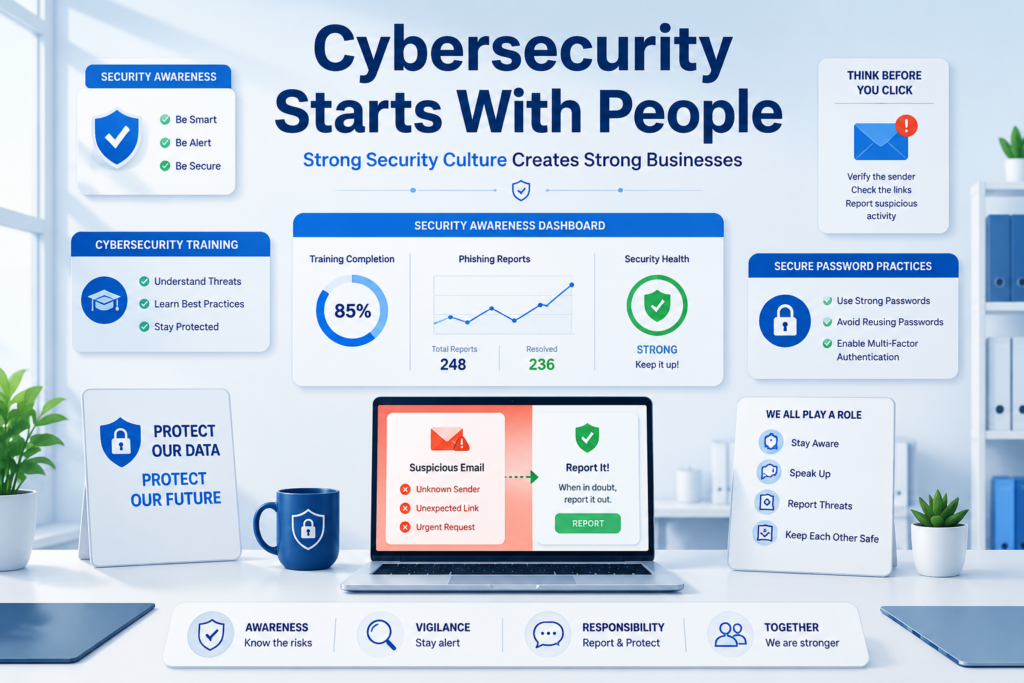
Technology alone cannot protect organizations from cyber threats.
Human behavior remains one of the largest cybersecurity risk factors.
Therefore, companies must develop a strong internal security culture.
What Defines a Strong Security Culture?
A mature security culture includes:
- Regular employee awareness training
- Secure password practices
- Phishing simulations
- Executive involvement
- Clear incident reporting procedures
- Continuous learning
When employees understand cybersecurity risks, organizations become more resilient.
Additionally, customers and enterprise partners often recognize organizations with mature operational practices as more trustworthy.
The Financial Benefits of Strong Cybersecurity
Many businesses still view cybersecurity as a cost rather than an investment.
However, strong cybersecurity can generate measurable financial returns.
Reduced Breach Costs
Preventing breaches saves organizations from:
- Legal penalties
- Recovery expenses
- Downtime losses
- Regulatory fines
- Customer compensation costs
Increased Customer Retention
Trustworthy brands retain customers more effectively.
Users are less likely to switch platforms when they feel their data is protected.
Higher Enterprise Value
Investors increasingly evaluate cybersecurity maturity when assessing business value.
Organizations with poor cybersecurity practices often face reduced valuations due to increased operational risk.
Security as a Competitive Advantage in SaaS and Technology Businesses
The SaaS industry provides one of the clearest examples of security-driven competitive advantage.
Enterprise clients frequently compare vendors based on security maturity.
Key Security Features Buyers Expect
Modern buyers expect SaaS providers to offer:
- Role-based access controls
- Encryption at rest and in transit
- Secure integrations
- Audit logging
- Threat monitoring
- Backup and disaster recovery systems
Businesses that exceed these expectations often outperform competitors during procurement processes.
Furthermore, integrating advanced protection systems and continuous monitoring solutions through platforms like BotDef’s cybersecurity services can strengthen both security posture and customer confidence.
Common Mistakes Businesses Still Make
Despite growing awareness, many organizations continue making avoidable cybersecurity mistakes.
Treating Security as an Afterthought
Some businesses prioritize growth speed over security readiness.
Unfortunately, this approach often creates vulnerabilities that become expensive later.
Ignoring Employee Training
Employees remain one of the most common attack vectors.
Without proper awareness training, phishing attacks and credential theft become more likely.
Relying Only on Compliance
Compliance alone does not guarantee strong security.
Organizations must continuously evolve their protection strategies to address emerging threats.
Lack of Incident Response Planning
Businesses without incident response plans often struggle to contain cyberattacks quickly.
Prepared organizations recover significantly faster.
Practical Steps to Turn Security Into a Selling Point
Businesses that want to use cybersecurity as a competitive advantage should focus on practical, customer-facing improvements.
1. Communicate Security Clearly
Explain security features in simple language.
Avoid overly technical explanations that confuse customers.
2. Publish Security Documentation
Transparency builds trust.
Provide security policies, compliance information, and privacy commitments publicly.
3. Invest in Continuous Monitoring
Threats evolve constantly.
Continuous monitoring helps organizations detect suspicious activity quickly.
4. Adopt Zero-Trust Principles
Zero-trust architectures improve access control and reduce attack surfaces.
5. Prioritize Secure Development
Build security into applications from the beginning rather than retrofitting protections later.
6. Educate Employees Regularly
Human awareness significantly improves organizational resilience.
7. Prepare for Incident Response
Create and regularly test incident response plans.
Prepared businesses recover faster and reduce operational disruption.
The Future of Cybersecurity as a Business Differentiator
Cybersecurity will continue evolving into a major business differentiator over the next decade.
As AI, cloud infrastructure, IoT devices, and remote work environments expand, organizations will face increasingly complex threat landscapes.
Customers, investors, and enterprise buyers will continue prioritizing businesses that demonstrate:
- Security maturity
- Transparency
- Operational resilience
- Privacy protection
- Continuous improvement
Consequently, companies that proactively invest in cybersecurity today will be better positioned for long-term success.
Conclusion
The era when cybersecurity existed only as a compliance requirement is rapidly disappearing. Modern businesses now understand that strong security practices directly influence customer trust, operational resilience, and market competitiveness.
Organizations that move beyond checkbox compliance and embrace security as a strategic advantage can differentiate themselves in crowded markets. They can build stronger customer relationships, accelerate enterprise sales, reduce operational risks, and protect long-term business value.
Most importantly, cybersecurity is no longer just about preventing attacks — it is about creating trust.
As digital ecosystems continue evolving, businesses that prioritize proactive security strategies will gain a significant competitive advantage over those that continue treating cybersecurity as a secondary concern. Resources and solutions available through platforms like BotDef can help organizations stay ahead of evolving threats while strengthening customer confidence in an increasingly security-conscious world.